
- Home
- Email Templates
- Halloween Email Templates, Ide ...


Halloween email marketing is not only for businesses that sell costumes, sweets, candles, or plastic skeletons.
Your business does not need a Halloween product to send a timely campaign. It simply needs an idea that feels playful, relevant, and easy for subscribers to join.
The best approach is to connect a familiar Halloween theme — ghosts, potions, mysteries, or scary problems — to something your audience already cares about.
In this article, we will show you Halloween email ideas and Halloween email templates. It is the start of the holiday season, and most email marketers are well aware of its relevance. Start things out right, build engagement with your audience, and show them that there is nothing to be scared of (apart from missing the new deal in your Halloween email). Finally, send your Halloween emails with a spooky email sign-off. To know how to do all that—read our article.
Free Halloween Email Templates
While creativity is a big part of marketing, it doesn’t mean you always need to start from scratch. The truth is, building campaigns from the ground up every single time can drain both energy and resources. That’s where customizable HTML templates come in handy—they let you stay creative while cutting out the unnecessary hassle.

With Sendigram’s free Halloween email templates collection, you get ready-made designs that can be fully adjusted and customized to match your brand. These templates make it easy to cover multiple occasions and industries—be it real estate or culinary adventures.

Can you send a Halloween email without selling Halloween products?
Yes. A Halloween email can use the occasion as a creative theme rather than promoting a seasonal product.
For example, you could:
- Turn existing products into themed bundles
- Create a short quiz or challenge
- Invite customers to join an in-store game
- Help subscribers identify a “scary” business problem
- Bring an abandoned task or workflow “back from the dead”
The campaign still needs to connect naturally to your business. The Halloween element simply makes the message more interesting.
1. E-commerce: Create a “Pick Your Potion” quiz
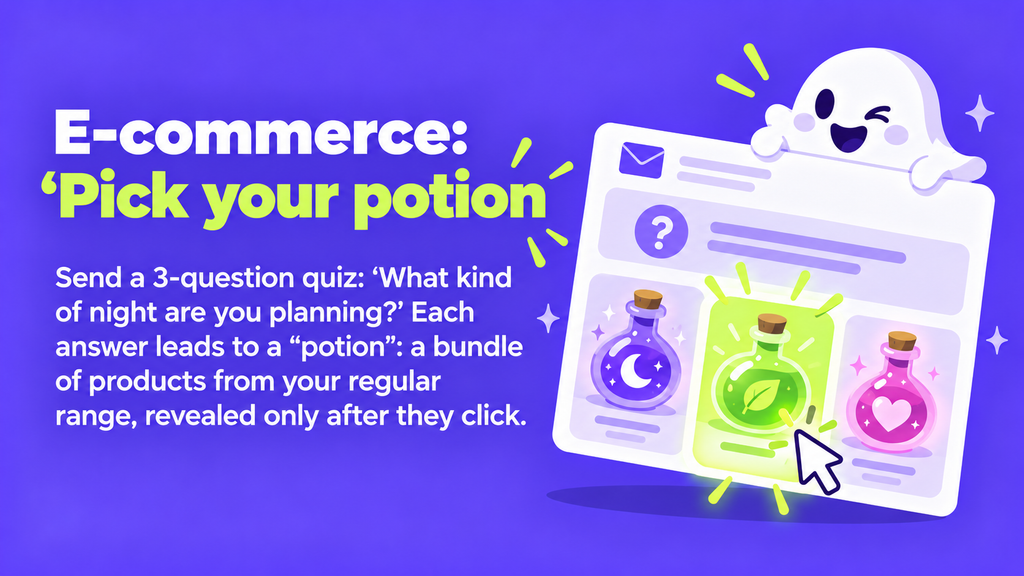
Instead of discounting your entire store, help customers discover a bundle based on what they need.
Send a short, three-question quiz beginning with something like:
What kind of night are you planning?
Each answer can lead to a different “potion”—a bundle assembled from products already in your regular catalog.
A skincare business might offer:
- The Rest and Recover Potion
- The Get Ready to Go Out Potion
- The Next-Morning Rescue Potion
A food brand could create movie-night, party-night, and quiet-night bundles. A stationery store could suggest products for planning, creativity, or relaxation.
Reveal the recommended bundle after the subscriber completes the quiz. This adds curiosity and makes product discovery feel like a game.
Possible subject lines:
- Pick your Halloween potion
- Which potion belongs in your basket?
- Take the quiz. Reveal your potion.
- Three questions. One mysterious recommendation.
2. Coaches: Ask, “Have you been ghosted by your own goals?”
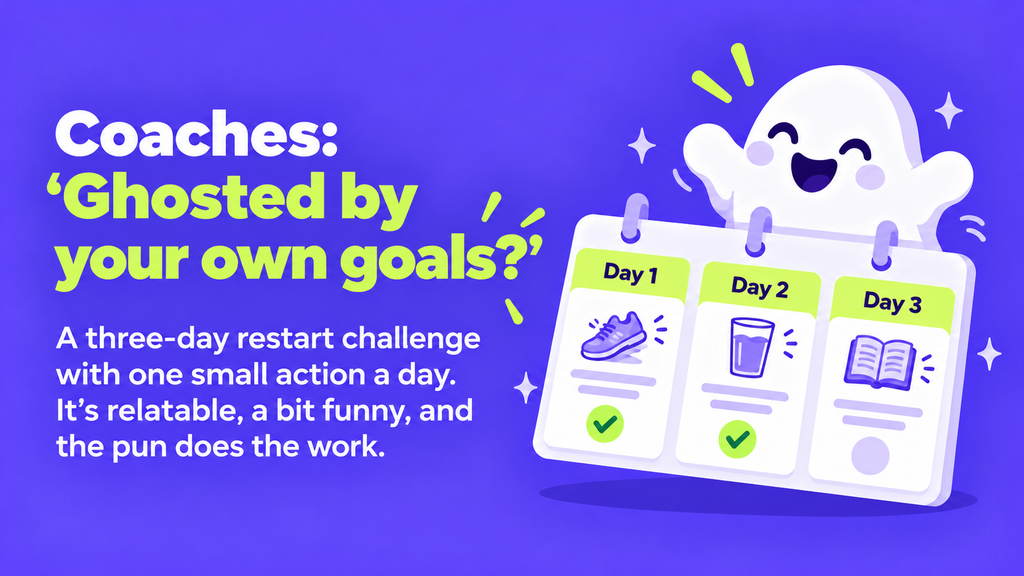
Halloween gives coaches and consultants an excellent excuse to revive something their audience has neglected.
Create a three-day restart challenge with one small action each day. Keep the tasks realistic enough to complete in a few minutes.
For example:
Day 1: Choose one goal you want to restart.
Day 2: Complete the smallest possible step.
Day 3: Decide what you will do next week.
The idea works because it combines a relatable problem with a light seasonal pun. It also gives you a natural reason to send a short email sequence rather than a single promotion.
Possible subject lines:
- Ghosted by your own goals?
- Let’s bring that abandoned goal back
- Your three-day goal revival starts here
- One small action. Three days. No haunting guilt.
3. Local businesses: Let a ghost escape into your shop
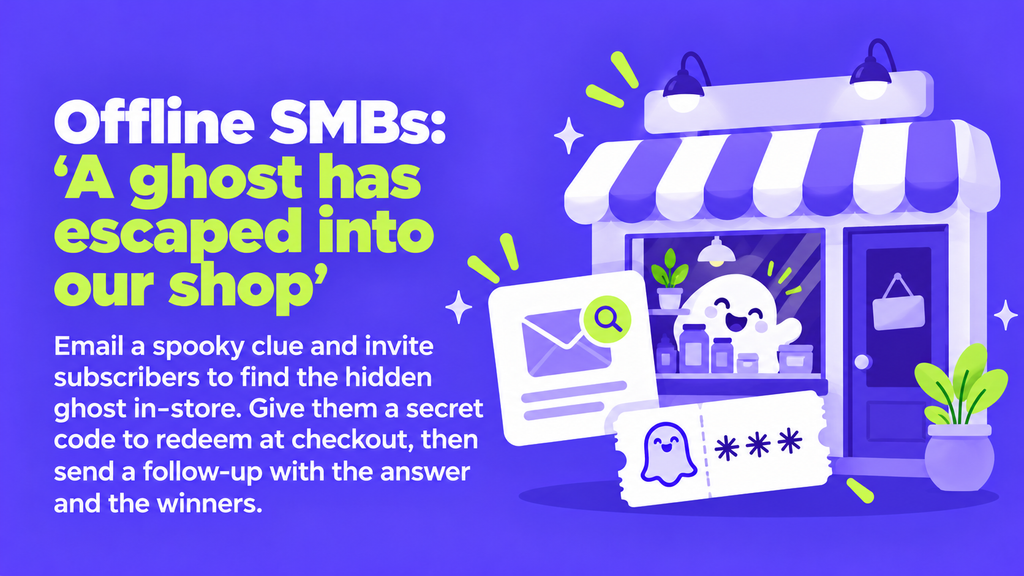
If you have a physical location, use email to create a small in-store treasure hunt.
Tell subscribers that a friendly ghost has escaped into your shop. Include a clue and ask customers to find it when they visit.
You could hide:
- A paper ghost near a featured product
- A symbol somewhere on the menu
- A secret word on a shelf
- A tiny character in the window display
Customers who find it can give a secret code at checkout to receive a small reward or enter a prize draw.
Afterward, send a follow-up revealing the hiding place and announcing the winner. This gives the campaign a clear beginning and ending while encouraging both store visits and email engagement.
Possible subject lines:
- A ghost has escaped into our shop
- Can you find our hidden visitor?
- Follow the clue—there may be a treat
- Something spooky is hiding in-store
4. B2B services: Diagnose your customer’s business nightmare
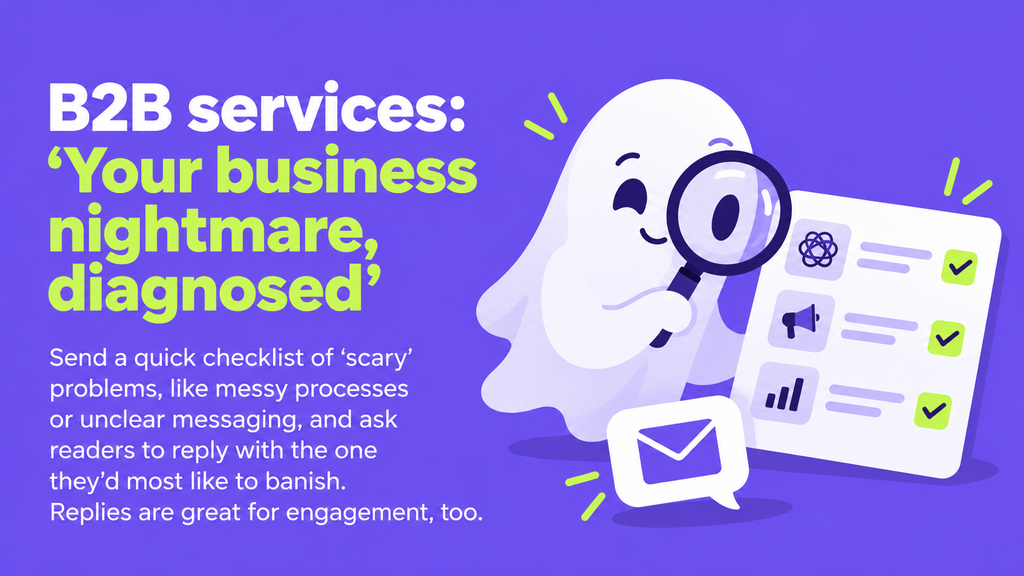
B2B Halloween emails do not need forced jokes or pictures of pumpkins in suits.
Instead, turn the problems you solve into a quick “business nightmare” checklist.
A marketing consultant might include:
- Unclear messaging
- Leads that disappear after the first conversation
- Campaigns that never get measured
- Processes held together by spreadsheets
An accountant could focus on missing documents, late invoices, or disorganized records. An IT company could cover weak passwords, missing backups, and outdated software.
Ask readers to reply with the one problem they would most like to banish. Their answers can begin useful conversations while showing you which challenges matter most to your audience.
Possible subject lines:
- What is your biggest business nightmare?
- A frighteningly quick business checkup
- Which problem would you banish first?
- Your business nightmare, diagnosed
5. SaaS: Bring an abandoned workflow back from the dead
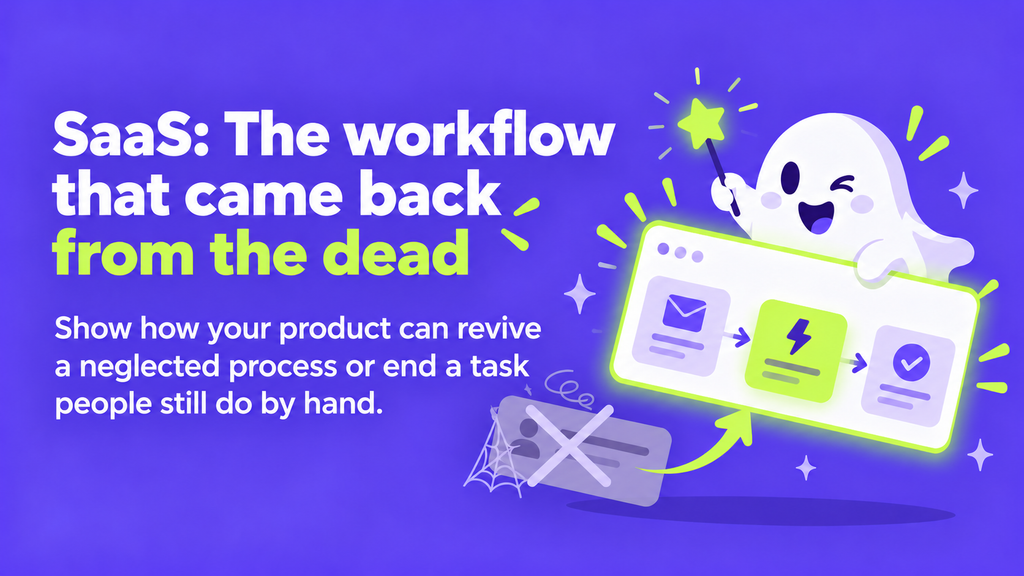
Most businesses have at least one task that should have been automated long ago.
Use your Halloween campaign to show how your software can revive a neglected process—or finally end a repetitive task that people still do manually.
You could demonstrate how your product helps customers:
- Restart an abandoned follow-up sequence
- Automate a repetitive weekly process
- Re-engage inactive contacts
- Replace a manual spreadsheet workflow
- Complete an unfinished setup
Focus on one specific before-and-after example. The email will be easier to understand than a long list of product features.
Possible subject lines:
- Bring this workflow back from the dead
- Still doing this task by hand?
- Revive the process everyone abandoned
- This automation deserves another life
How to make a Halloween email work
A clever theme may earn attention, but the email still needs to be useful.
Keep the idea simple
Subscribers should understand the activity or offer immediately. If the Halloween concept takes a paragraph to explain, simplify it.
Make participation easy
Use one clear action: click, reply, take a quiz, visit the shop, or complete a small challenge.
Connect the theme to a real need
The joke gets attention. The useful result gives people a reason to engage.
Make the email easy to scan
Use a short introduction, a prominent call to action, and a mobile-friendly design. Avoid filling every available space with Halloween decorations.
Plan the follow-up
If you launch a quiz, challenge, competition, or checklist, decide what happens afterward. Send the result, reveal the answer, continue the challenge, or respond to subscribers who participated.
When should you send a Halloween marketing email?
For a multi-email challenge, quiz, or in-store activity, begin one to two weeks before Halloween. This gives subscribers enough time to participate.
A simple reminder, flash promotion, or last-minute idea can be sent closer to October 31.
If your campaign includes several messages, avoid sending every email to everyone. Follow up based on participation where possible—for example, whether someone clicked the quiz, joined the challenge, or visited the offer page.
What is the best Halloween email idea for a small business?
The best Halloween email idea is one that uses what your business already has.
You do not need a seasonal product range or an elaborate campaign. Choose one familiar customer problem, add a playful Halloween angle, and give the reader one simple action to take.
Your products do not need pumpkins.
Your email just needs a little mischief.
Fun & Memorable Halloween Email Sign-Offs
A good ending is just as important as a good beginning. That’s why adding a clever spooky email sign-off can make your Halloween email stick with your readers. Here are some sign off examples, that can do the job:
- “Stay spooky, The [Brand] Team 👻”
- “No tricks, just treats 🎃”
- “See you on the dark side 🌑”
- “Creep it real, [Brand]”
- “Fangs for being with us 🧛”
- “Until the next full moon 🌕”
- “Bone appétit 💀”
- “Happy haunting from all of us”
- “Wishing you thrills & chills ✨”
- “Ghosting you after this email 👀”
👉 Tip: The right sign-off should feel aligned with your business. A fun lifestyle brand can go with emojis and humor, while a professional service might just sound a bit lighter than usual. The main idea when adapting your email designs and message to the spirit of Halloween is to stay true to your brand voice while spicing it up with the spirit of the holiday—not the other way round.
Frequently asked questions
Do Halloween emails need to include a discount?
No. Quizzes, challenges, checklists, competitions, product bundles, and in-store activities can create engagement without reducing your prices.
Can B2B companies send Halloween emails?
Yes. B2B companies can use Halloween themes to discuss common problems, abandoned workflows, business risks, or tasks customers would like to eliminate.
What should a Halloween email include?
A Halloween email should include a clear concept, a benefit for the reader, one main call to action, and a design that works on both desktop and mobile.
Is it too late to send a Halloween email?
Not necessarily. A simple campaign can be created and sent within a few days. Choose an idea that does not require a complicated landing page, extensive design work, or a long sequence.
How many Halloween emails should a business send?
A straightforward promotion may need only one main email and one reminder. A challenge, quiz, or competition may work better as a short sequence with an introduction, follow-up, and final result.
Ready to create your Halloween campaign? With Sendigram, you can turn an idea into an email, customize the design, choose your audience, and check the campaign before launch.


 Your Privacy Choices
