
- Home
- Statistics and Analytics
- What Is Last-Click Attribution ...


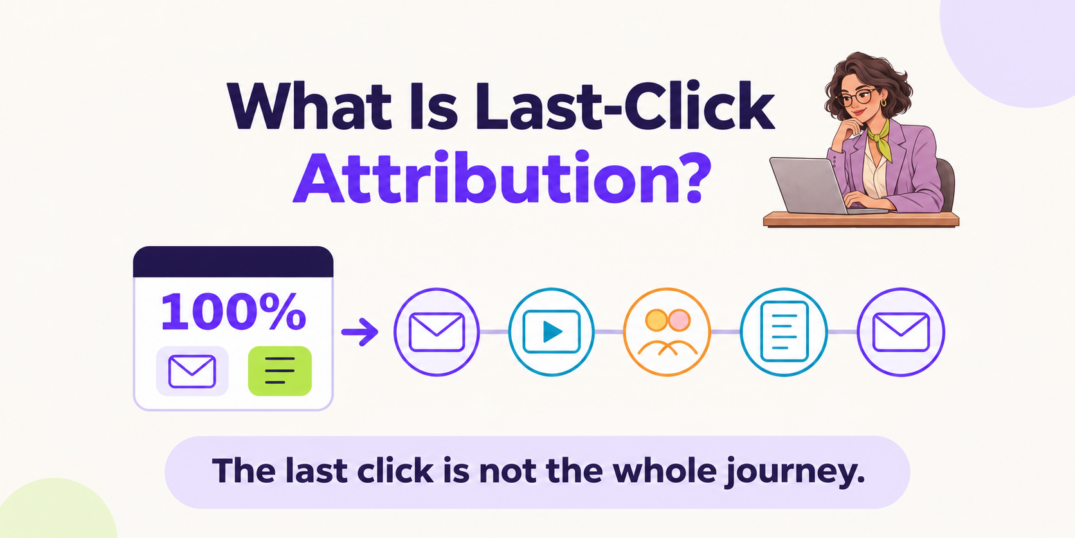
Your analytics dashboard says one email generated the sale.
The customer remembers something different.
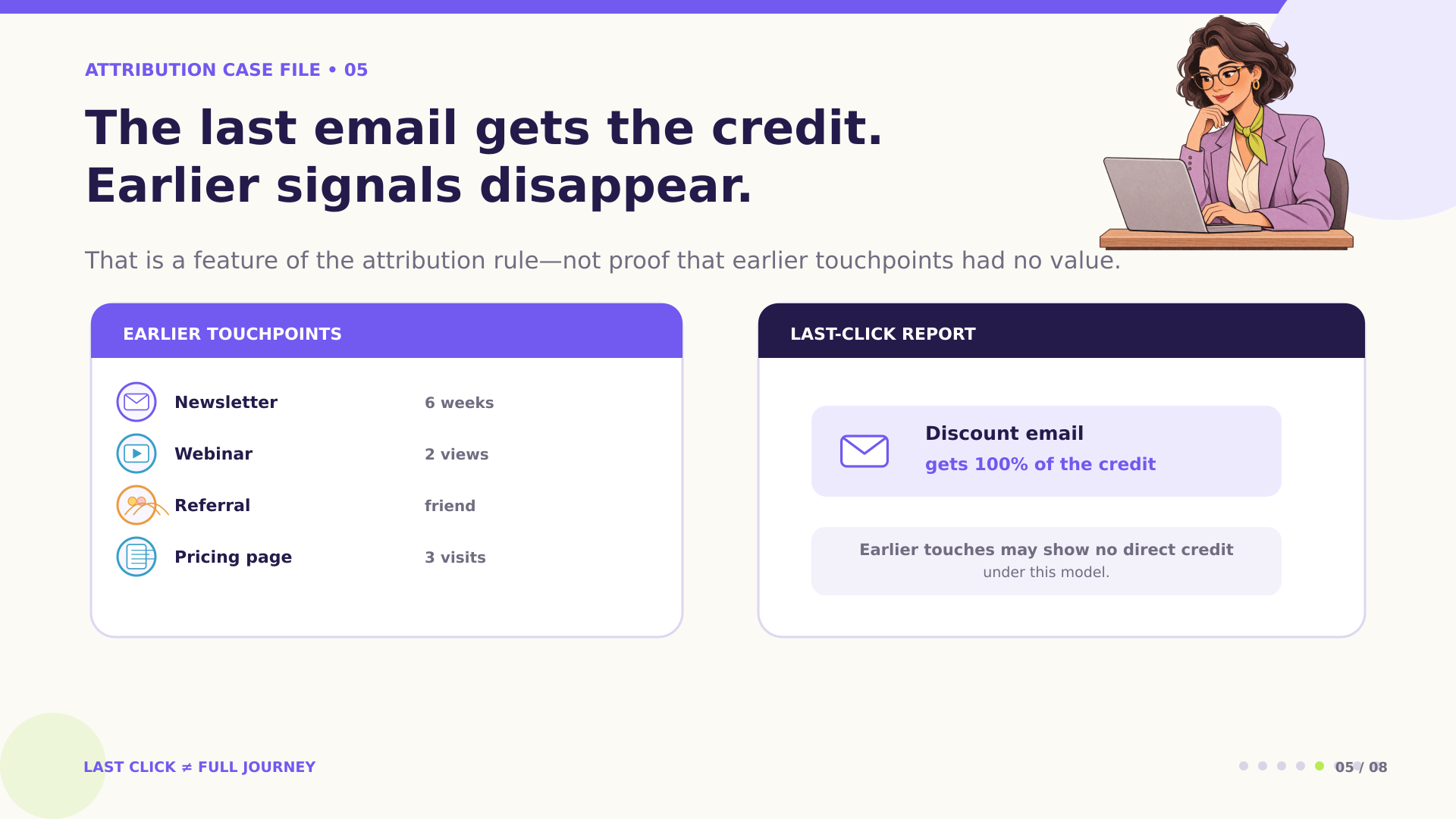
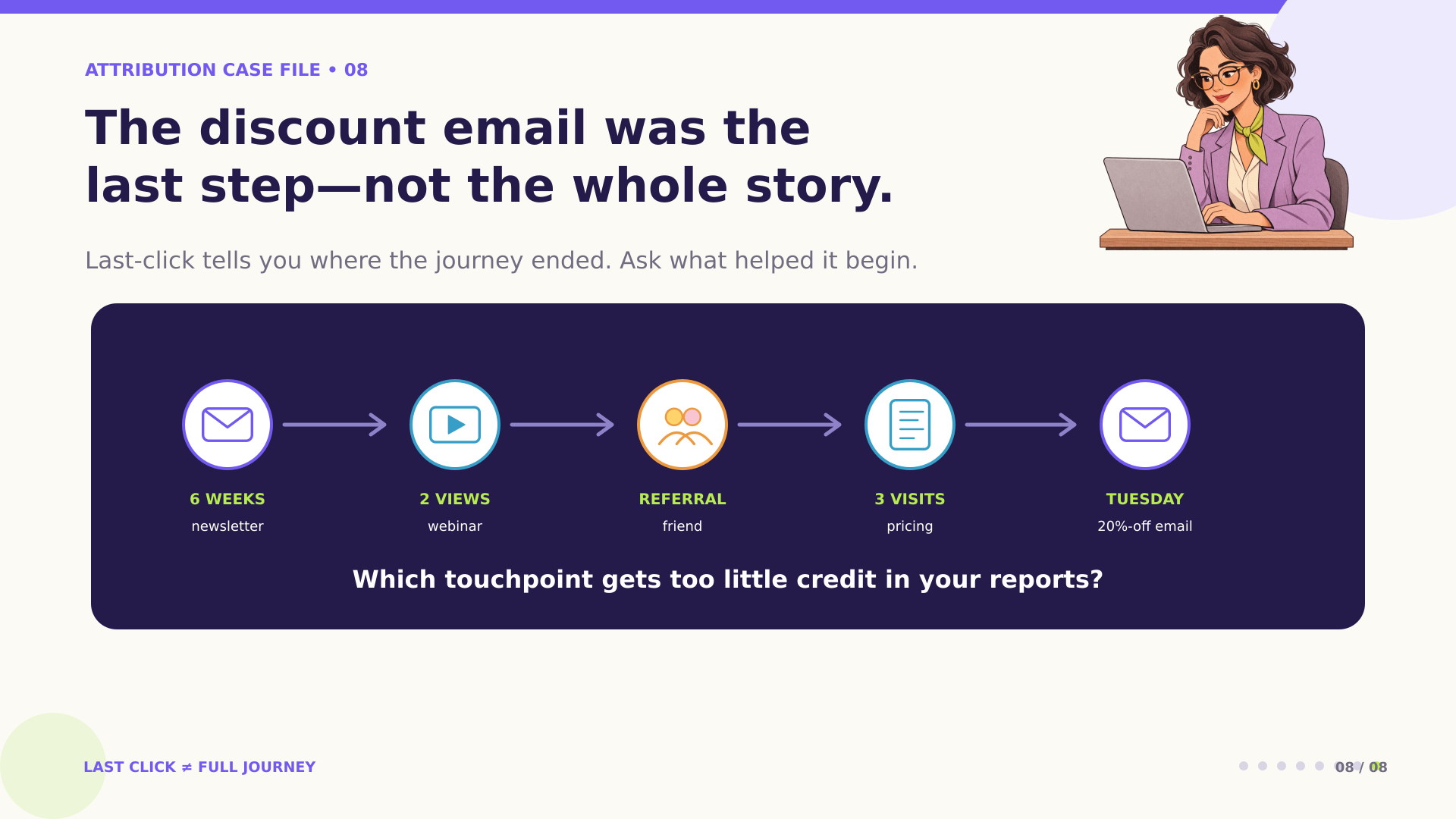
Six weeks before buying, she read your newsletter about managing remote projects. Later, she watched a webinar… twice. A friend mentioned that their team already used your product. She visited the pricing page three times, compared the plans, and finally clicked a 20%-off email before purchasing an annual subscription.
The attribution report gives the discount email 100% of the credit.
But did that email create the decision or simply complete it?
The short answer
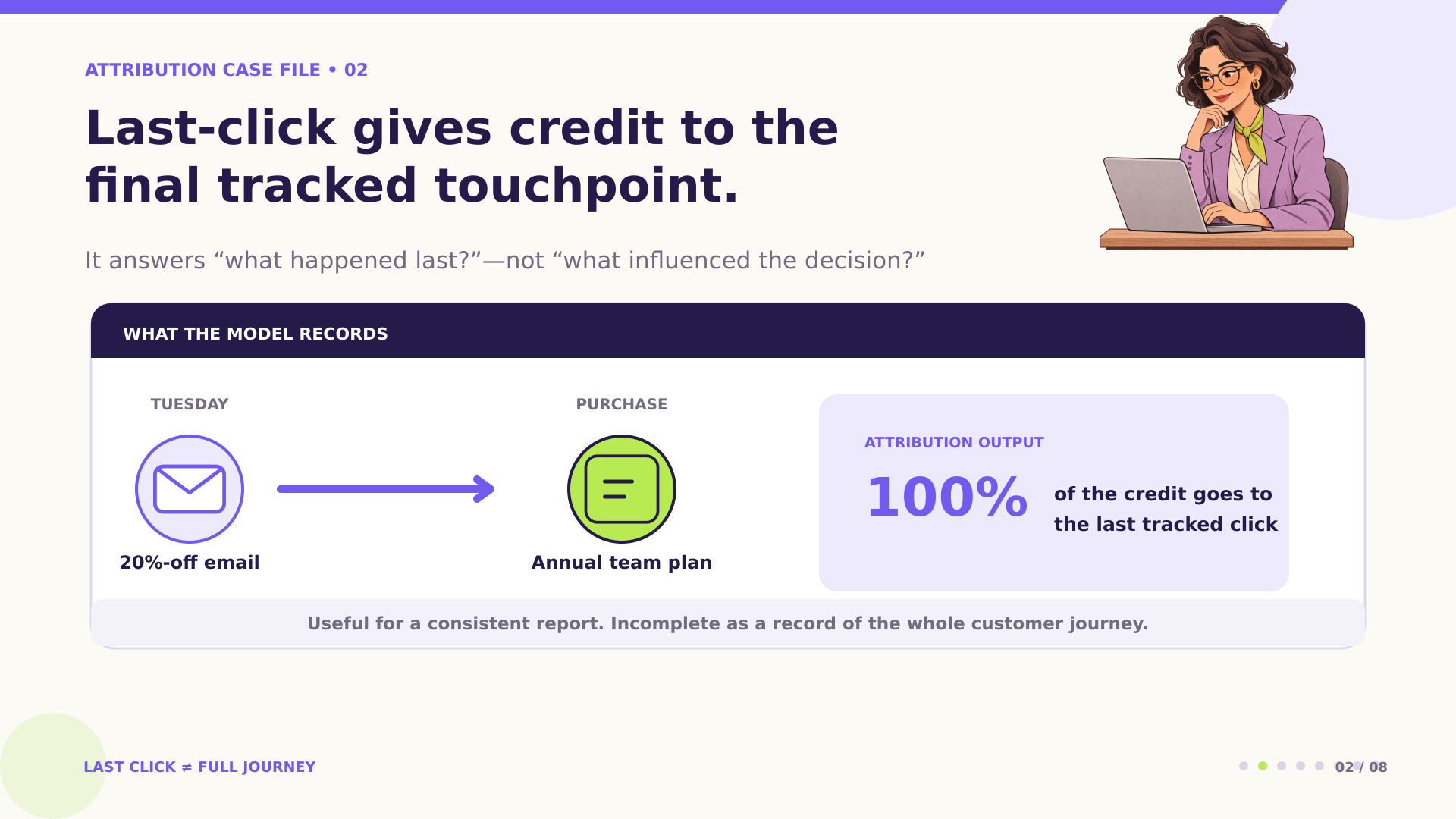
Last-click attribution gives all conversion credit to the final tracked touchpoint before a purchase. It can tell you where a customer journey ended, but it cannot show every email, referral, page visit, or interaction that influenced the decision.
That makes last-click attribution useful for consistent reporting, but incomplete for evaluating the full customer journey.
What is last-click attribution?
Last-click attribution is a marketing measurement model that assigns 100% of a conversion’s credit to the last tracked interaction before the conversion.
For example:
- A subscriber reads a newsletter.
- They attend a webinar.
- A colleague recommends the product.
- They visit the pricing page several times.
- They click a promotional email.
- They buy.
Under a last-click model, the promotional email receives all the credit because it was the final recorded click.
The model answers:
What happened immediately before the purchase?
It does not necessarily answer:
What persuaded the customer to purchase?
That distinction matters.
Why can last-click attribution be misleading?
Most buying decisions—especially for software, services, and higher-value products—develop over time.
Customers may need to:
- Understand the problem
- Learn about possible solutions
- Compare alternatives
- See the product in action
- Find evidence that it works
- Discuss the purchase with someone they trust
- Review features and pricing
- Wait for the right time to act
The final email may provide the last nudge. But the customer may never have clicked it without all the earlier interactions.
Last-click attribution records the closing touchpoint while making much of the supporting journey disappear.
How earlier emails influence a conversion
Imagine a customer who eventually purchases an annual team plan.
Her journey might look like this:
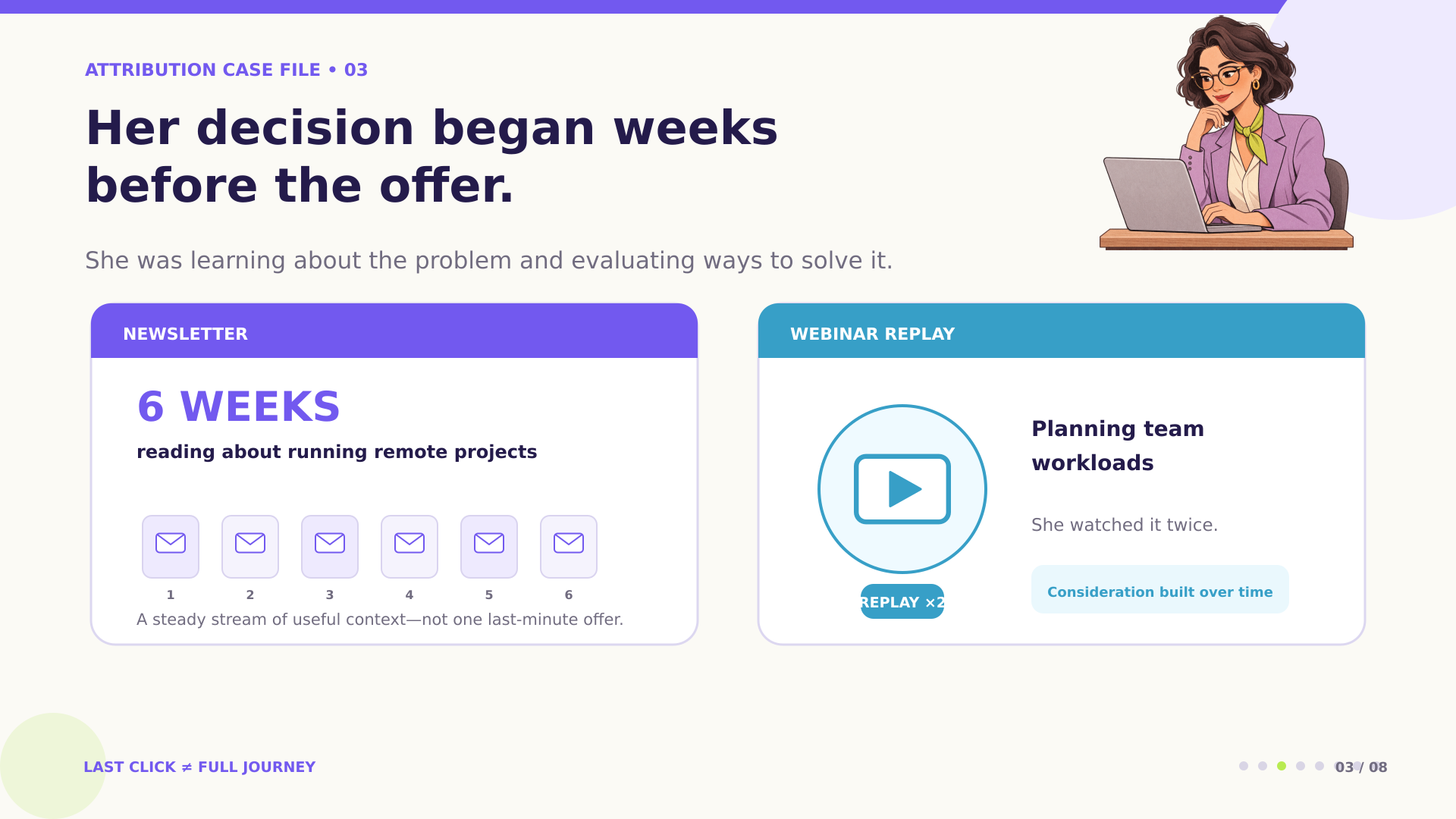
Six weeks before the purchase: the newsletter
She reads an article about managing workloads across a remote team.
She is not ready to buy. She may not even be actively comparing products yet. But the email helps her understand the problem and introduces your company as a useful source of information.
During the following weeks: the webinar
She watches a webinar explaining how teams can plan projects more effectively. Later, she returns and watches part of it again.
The webinar helps her understand how a potential solution could work in practice.
Closer to the decision: the referral
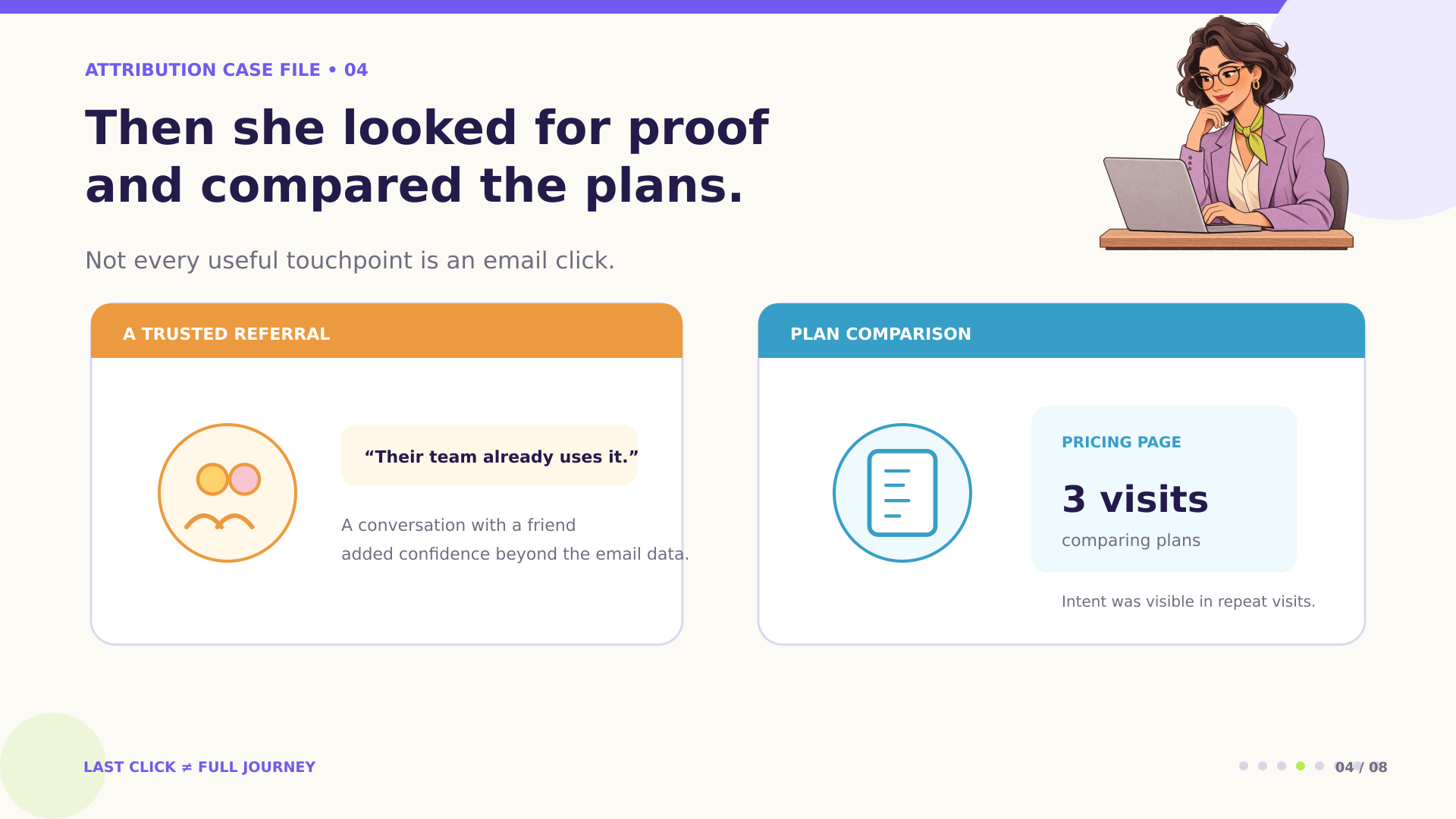
A friend tells her that their team already uses your product.
This interaction may never appear in an email marketing report, but it adds trust and reduces the perceived risk of purchasing.
During evaluation: the pricing page
She visits the pricing page three times and compares the available plans.
Those repeat visits show growing intent, even if she does not convert during any of them.
The final step: the promotional email
On Tuesday, she clicks an email offering 20% off and buys the annual plan.
The email mattered. It may have provided the urgency she needed to act.
However, calling it the sole cause of the sale ignores everything that made the offer relevant in the first place.
How last-click attribution can lead to bad marketing decisions
The biggest problem is not simply that the report is incomplete. It is what marketers may do because of that report.
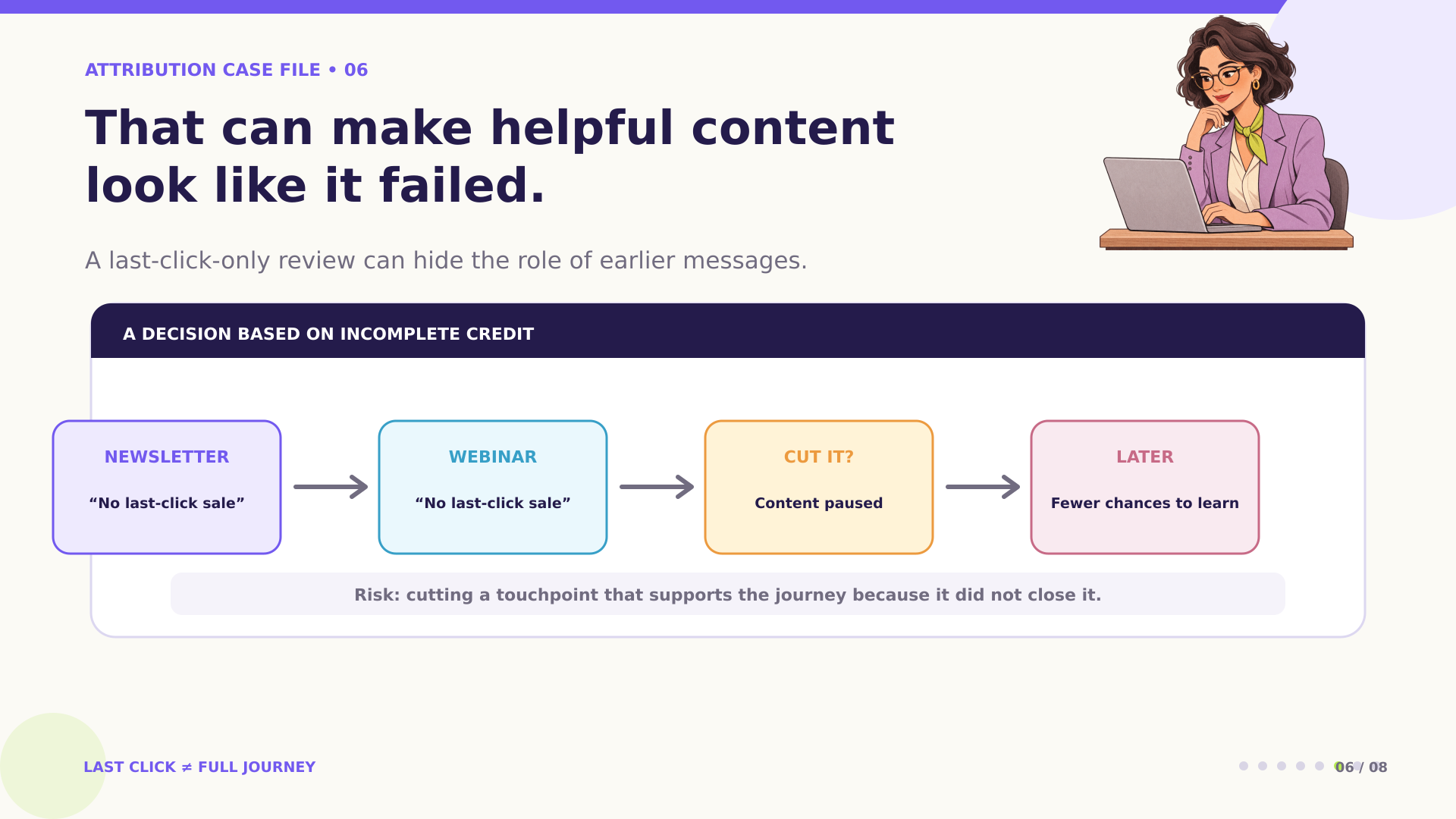
Suppose the newsletter and webinar generated no last-click conversions. A marketer reviewing each campaign in isolation could conclude that neither one worked.
The company might then:
- Reduce educational content
- Cancel webinars
- Send fewer nurturing emails
- Invest more heavily in discounts
- Judge every campaign by immediate sales
- Remove touchpoints that build trust over time
Initially, the promotional emails may continue converting.
But without the content that helps customers learn, compare, and develop confidence, fewer people may reach the point where a discount can persuade them to buy.
The marketer has cut part of the journey because the attribution model failed to give it visible credit.
Does this mean last-click attribution is useless?
No.
Last-click attribution can provide a simple, consistent view of the final recorded interaction before a conversion. It can help you identify which campaigns frequently close purchases or bring customers back when they are ready to act.
The problem begins when last-click reporting is treated as a complete explanation of customer behavior.
Use it as one measurement view—not the entire truth.
How should you evaluate the full customer journey?
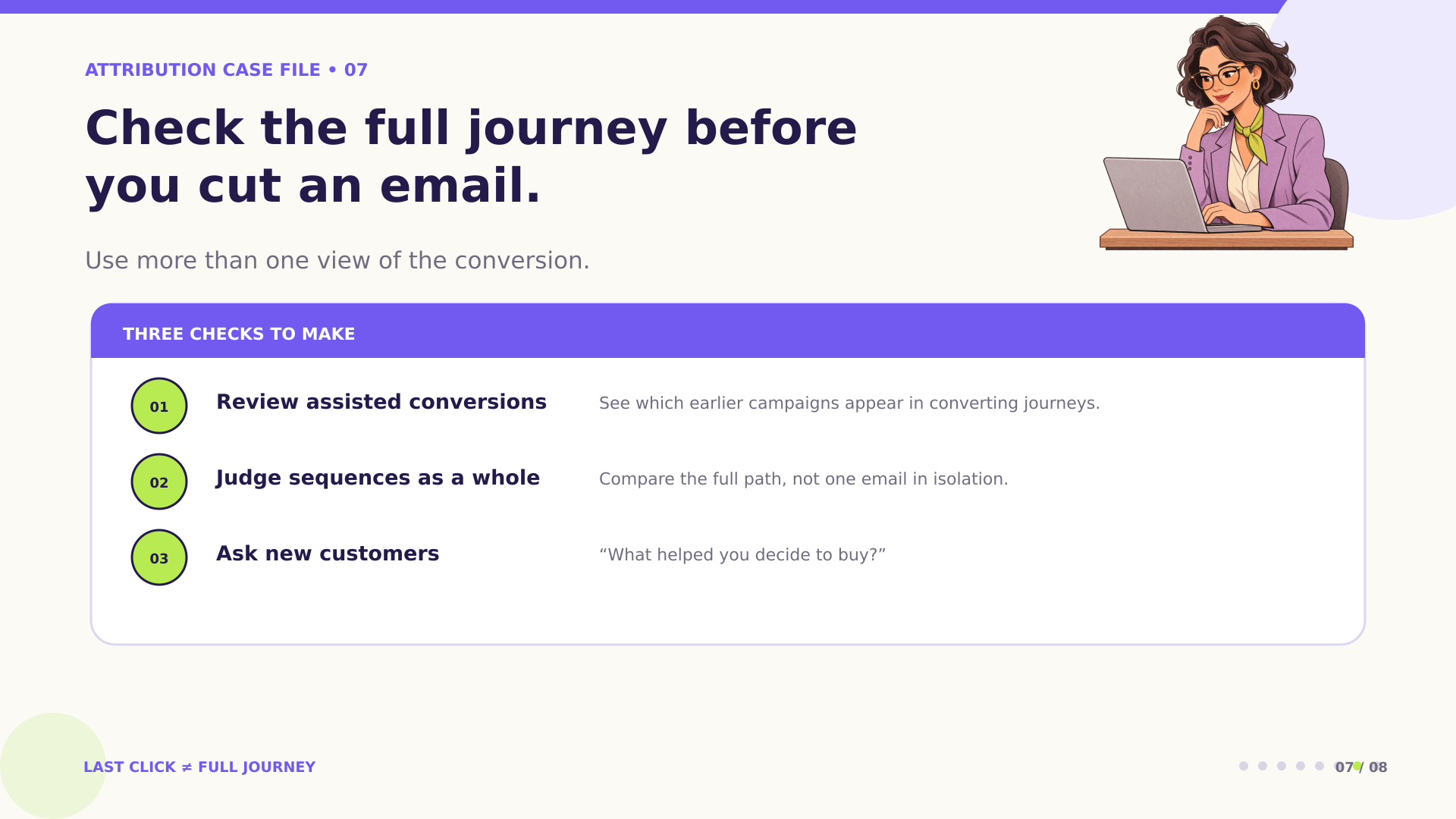
Before pausing an email because it generated few last-click sales, perform these three checks.
1. Review assisted conversions
An assisted conversion occurs when a campaign contributes to a converting journey without being the final interaction.
Look for emails that frequently appear earlier in the paths of customers who eventually purchase. They may be creating awareness, educating prospects, answering objections, or building confidence.
The terminology and reports available will depend on your analytics platform, but the principle is the same: identify the touchpoints that support conversions, not only those that close them.
2. Evaluate email sequences as a whole
Emails within an automated sequence often perform different jobs.
One email may introduce the problem. Another may explain a feature. A third may provide proof. A fourth may answer an objection, and the last one may present an offer.
Judging every email by direct revenue ignores how the sequence works collectively.
Evaluate both:
- The performance of individual messages
- The performance of the complete sequence
If the sequence converts well overall, an educational email may still be valuable even if it is rarely the final click.
3. Ask customers what influenced them
Analytics can show recorded behavior. Customers can reveal context that tracking misses.
Add a simple post-purchase question such as:
What helped you decide to buy?
Possible responses may include:
- An email or newsletter
- A webinar
- A recommendation
- A comparison article
- Customer reviews
- A sales conversation
- The pricing page
- A promotional offer
Keep an open-text option available. It may reveal touchpoints you were not measuring at all.
What metrics should you consider beyond last-click sales?
Depending on the purpose of the email, useful supporting metrics may include:
- Assisted conversions
- Sequence-level conversion rate
- Click-through rate
- Repeat website visits
- Webinar registrations or attendance
- Product page engagement
- Trial activations
- Demo requests
- Replies
- Post-purchase survey responses
- Time from first interaction to purchase
No single metric explains the entire journey. The goal is to match the measurement to the role of the campaign.
An educational newsletter and a limited-time promotional email should not necessarily be judged by identical standards.
The bottom line
The email that receives the conversion credit is not always the email that created the demand.
Last-click attribution tells you where the measurable journey ended. It does not tell you everything that helped the journey begin—or what gave the customer enough confidence to continue.
Before you cut an email, pause a webinar, or stop creating educational content, look beyond the final click.
The discount email may have closed the sale.
That does not mean it made the decision alone.
Frequently Asked Questions
What is last-click attribution?
Last-click attribution is a measurement model that assigns all conversion credit to the final tracked touchpoint before a purchase or other conversion.
Why does last-click attribution undervalue email marketing?
It can overlook newsletters, educational campaigns, webinars, and nurture emails that influence the customer earlier in the buying journey but are not the final clicked message.
Is last-click attribution accurate?
It can accurately identify the last tracked interaction. However, it is not a complete record of every interaction that influenced the customer’s decision.
What is an assisted conversion?
An assisted conversion is a conversion in which a marketing touchpoint contributed to the customer journey without being the final interaction before the purchase.
How should marketers measure email performance?
Marketers should combine last-click data with assisted conversions, sequence-level performance, engagement signals, website behavior, and customer feedback.
Should I stop using last-click attribution?
Not necessarily. Use it as one reporting model, but avoid relying on it as the sole basis for evaluating campaigns or cutting earlier-stage content.


 Your Privacy Choices
