
- Home
- Comparing Alternatives
- Top 6 beehiiv Alternatives in ...



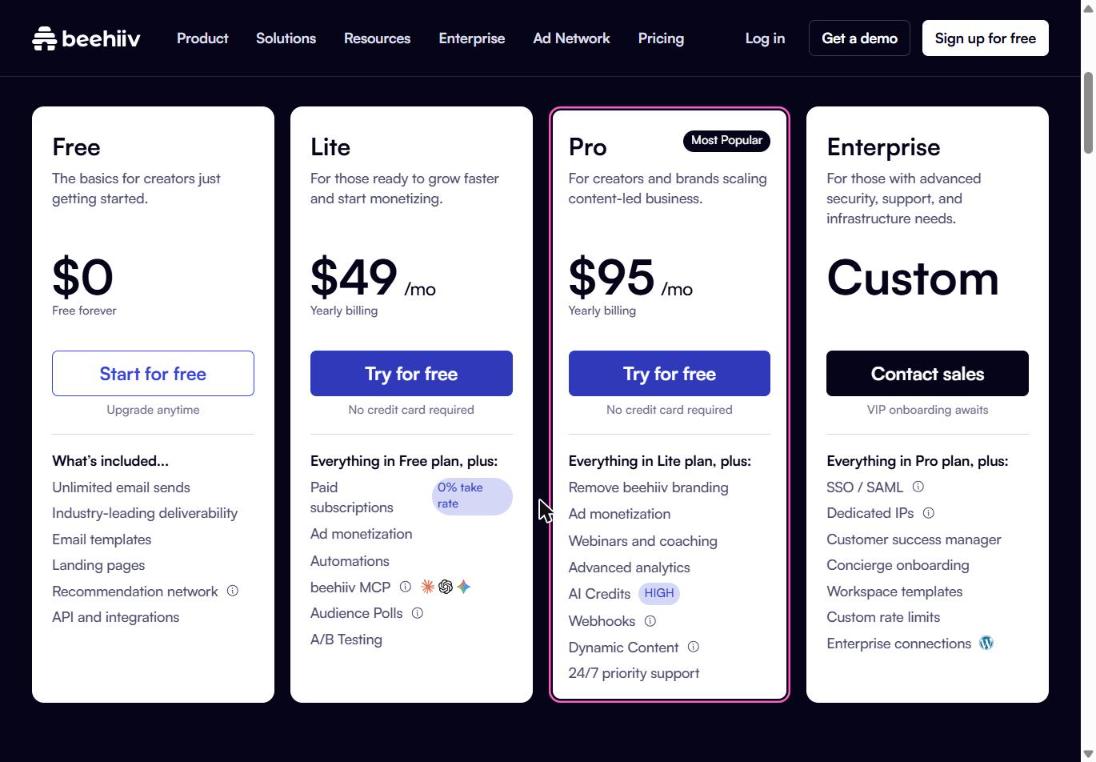
beehiiv is one of the fastest-growing newsletter platforms, with a built-in website, a recommendation network, paid subscriptions with a 0% take rate, and an ad network. But its free plan stops at 2,500 subscribers, and paid plans start at $49 per month for 1,000 subscribers (billed yearly). For a creator who just wants to send emails, that’s a lot to pay for features they may never use.
Quick answer: The best beehiiv alternatives in 2026 are Sendigram (best for small businesses that pay per email sent), Substack (best free option for paid newsletters), Kit (best for creators selling digital products), Ghost (best open-source publishing platform), MailerLite (best budget all-rounder), and Buttondown (best minimalist newsletter tool).
In this article, we compare beehiiv with Sendigram and five other popular alternatives: Substack, Kit, Ghost, MailerLite, and Buttondown. For each, we cover key features, current pricing, pros and cons, and who it’s best for.
Start with the key takeaways in the table below. Prices are as of October 2026 and change often, so check each provider’s pricing page before you buy.
| Platform | Free plan | Paid plans from | Best for |
|---|---|---|---|
| beehiiv | Up to 2,500 subscribers | $49/mo (Lite, 1,000 subscribers, billed yearly) | Growing and monetizing a media newsletter |
| Sendigram | 10,000 free emails to start | $6/mo (SendiStart, 5,000 emails) | Small businesses without a marketing team |
| Substack | Free to publish; 10% fee on paid subscriptions | No plans; 10% of paid revenue + card fees | Writers launching a paid newsletter |
| Kit | Up to 10,000 subscribers | $33/mo (Creator, 1,000 subscribers, billed yearly) | Creators selling digital products |
| Ghost | No (free trial; free if self-hosted) | $15/mo (Starter, 1,000 members, billed yearly) | Independent publishers who want full ownership |
| MailerLite | 250 subscribers, 2,500 emails/mo | $10.80/mo (Comfort, 500 subscribers, billed yearly) | A budget all-in-one email tool |
| Buttondown | Up to 100 subscribers | $9/mo (up to 1,000 subscribers) | Minimalist, privacy-first newsletters |
beehiiv at a Glance
beehiiv was founded in 2021 by early Morning Brew team members and is built for newsletters that want to grow and earn money. Every plan includes a newsletter, website, podcast hosting, community features, and digital products.
Key features include a recommendation network for cross-promoting with other newsletters, paid subscriptions with no platform cut, the beehiiv Ad Network, automations, A/B testing, audience polls, and an MCP server that connects your publication to AI assistants.
Pricing (October 2026, for 1,000 subscribers):
- Free: $0 for up to 2,500 subscribers, 1 publication, and 1 team seat. Includes unlimited sends, landing pages, and the recommendation network.
- Lite: $49/mo billed yearly ($59 monthly), up to 100,000 subscribers. Adds paid subscriptions (0% take rate), ad monetization, automations, and A/B testing.
- Pro: $95/mo billed yearly ($109 monthly), up to 250,000 subscribers. Adds branding removal, webinars, advanced analytics, webhooks, dynamic content, and 24/7 priority support.
- Enterprise: custom pricing with SSO, dedicated IPs, and a customer success manager.
Prices rise as your subscriber count grows.
Why people look for beehiiv alternatives:
- The free plan caps at 2,500 subscribers, and the jump to Lite is steep.
- beehiiv branding stays on your newsletter until the $95/mo Pro plan.
- Many features (podcast, community, ad network) are built for media creators, not small businesses.
- Automations and A/B testing are not on the free plan.
Sendigram
Full disclosure: Sendigram is our own product. We’ve aimed to keep this comparison fair, including where Sendigram falls short.

Features compared to beehiiv
beehiiv is built for media-style newsletters that grow through referrals and earn through ads and paid subscriptions. Sendigram is built for small businesses that use email to sell: announcements, promotions, welcome series, and abandoned-cart reminders.
Instead of a recommendation network and ad marketplace, Sendigram focuses on guidance and AI. The AI Email Builder turns a short prompt into a ready-to-edit email with copy, images, and layout, and the Sendigram AI Assistant helps you create emails and campaigns. You also get 400+ templates, ready-made automation workflows, and a campaign calendar for planning around holidays and key dates.
Deliverability is a core focus. Sendigram validates your contacts for free and checks every campaign and automation before it goes out. You can connect multiple online stores at no extra cost.
Compared with beehiiv, Sendigram has no hosted website, podcast hosting, paid subscriptions, or ad network. If those are central to your business, beehiiv or Substack will fit better.
Pricing
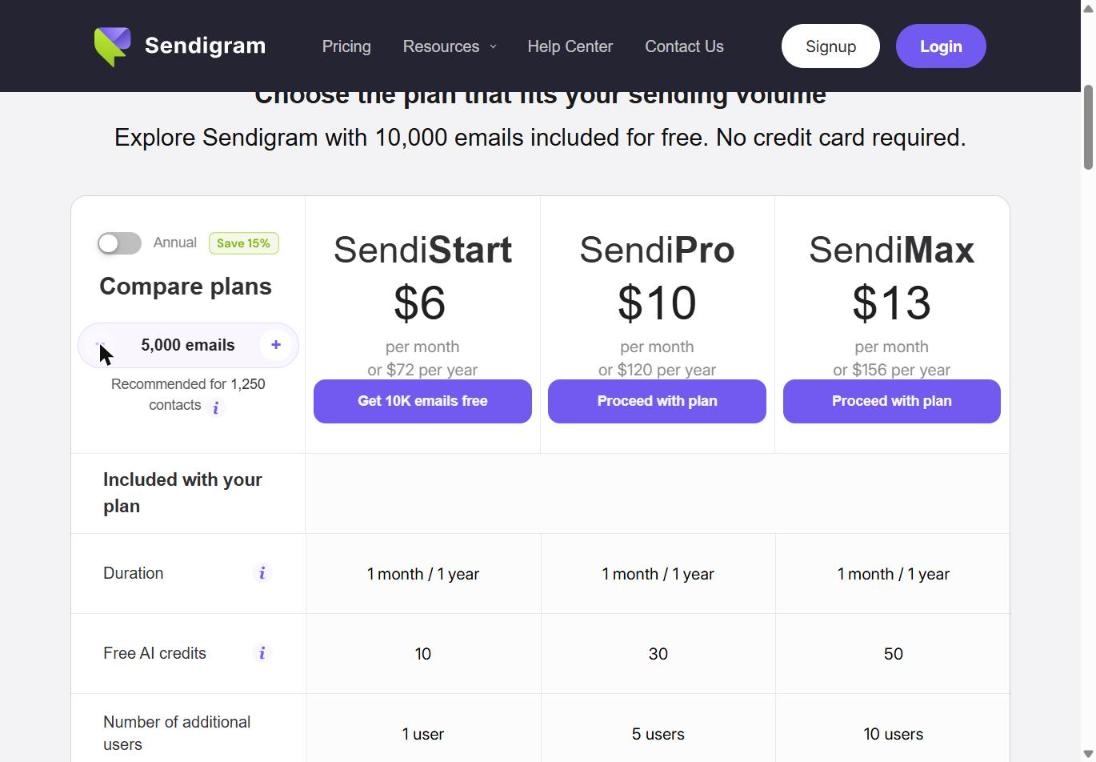
Sendigram charges for the emails you send, not the contacts you store, so you can keep unlimited contacts at no extra cost. You start with 10,000 free emails, no credit card required.
Paid plans start at $6 per month for 5,000 emails on SendiStart, with SendiPro ($10) and SendiMax ($13) adding more AI credits and users. At 20,000 emails per month, the plans cost $16, $20, and $25. Annual billing saves 15%.
Pros and cons
Pros:
- Pay for emails sent, with unlimited contacts
- AI Email Builder and AI Assistant
- Built-in deliverability checks before every send
- Guided onboarding and free expert support, including migration
Cons:
- No hosted website, paid subscriptions, or ad network
- No referral or recommendation network for list growth
- Smaller integration library than beehiiv
Best for
Small businesses, solopreneurs, and online stores that want professional email marketing without hiring specialists, especially those with large lists who send occasionally.
Substack
Substack launched in 2017 and is the best-known platform for writers who want to turn a newsletter into a paid subscription business.
Features compared to beehiiv
Like beehiiv, Substack combines a newsletter with a hosted website, podcast and video publishing, and a recommendation system. Its biggest advantage is the Substack app and network: readers discover new publications through Notes, recommendations, and the app’s feed, which can bring in subscribers without paid ads.
The trade-off is control. Substack has no automations, very limited design options, and no A/B testing. Your publication lives inside Substack’s ecosystem, and the platform’s own brand is prominent.
Pricing
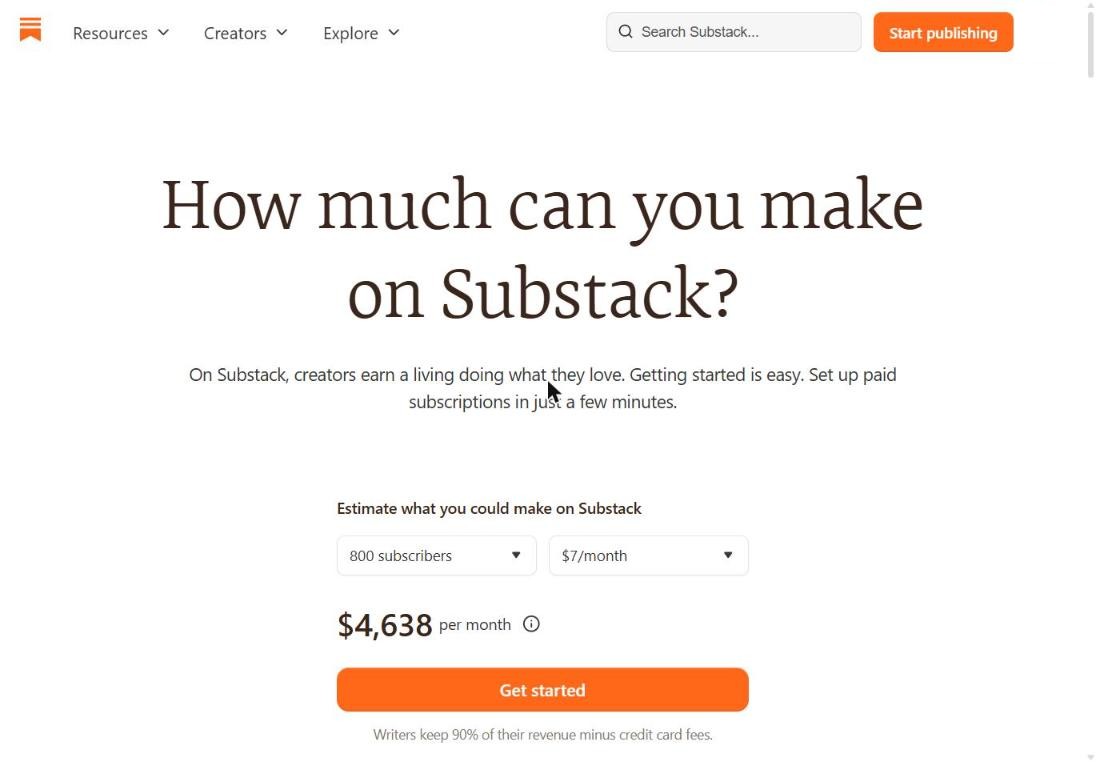
Substack is free to start, with no subscriber limits. When you turn on paid subscriptions, Substack takes 10% of your revenue, plus credit card processing fees. That means you pay nothing until you earn, but costs grow with your success: a newsletter earning $5,000 per month pays Substack about $500 per month, before card fees.
Pros and cons
Pros:
- Free to use, with unlimited subscribers
- Built-in discovery through the Substack app, Notes, and recommendations
- Simple setup for paid subscriptions
Cons:
- 10% fee on all paid subscription revenue (beehiiv takes 0%)
- No automations or A/B testing
- Limited branding and design control
Best for
Writers and journalists who want to start a paid newsletter for free and grow through Substack’s reader network.
Kit (formerly ConvertKit)
Kit, known as ConvertKit until its 2024 rebrand, is an email platform built for creators who sell: courses, ebooks, coaching, and paid newsletters.
Features compared to beehiiv
Kit and beehiiv overlap more than any other pair on this list. Both offer landing pages, paid newsletters, a creator recommendation network, sponsorship tools, and an MCP server for AI assistants.
Where Kit pulls ahead is automation and commerce. Its Visual Automations builder handles complex sequences, launches, and tagging rules, and you can sell digital products and subscriptions on every plan, including Free. Paid plans add SMS marketing, RSS campaigns, and a large app store of integrations.
Unlike beehiiv, Kit doesn’t include a full publication website, podcast hosting, or community features.
Pricing
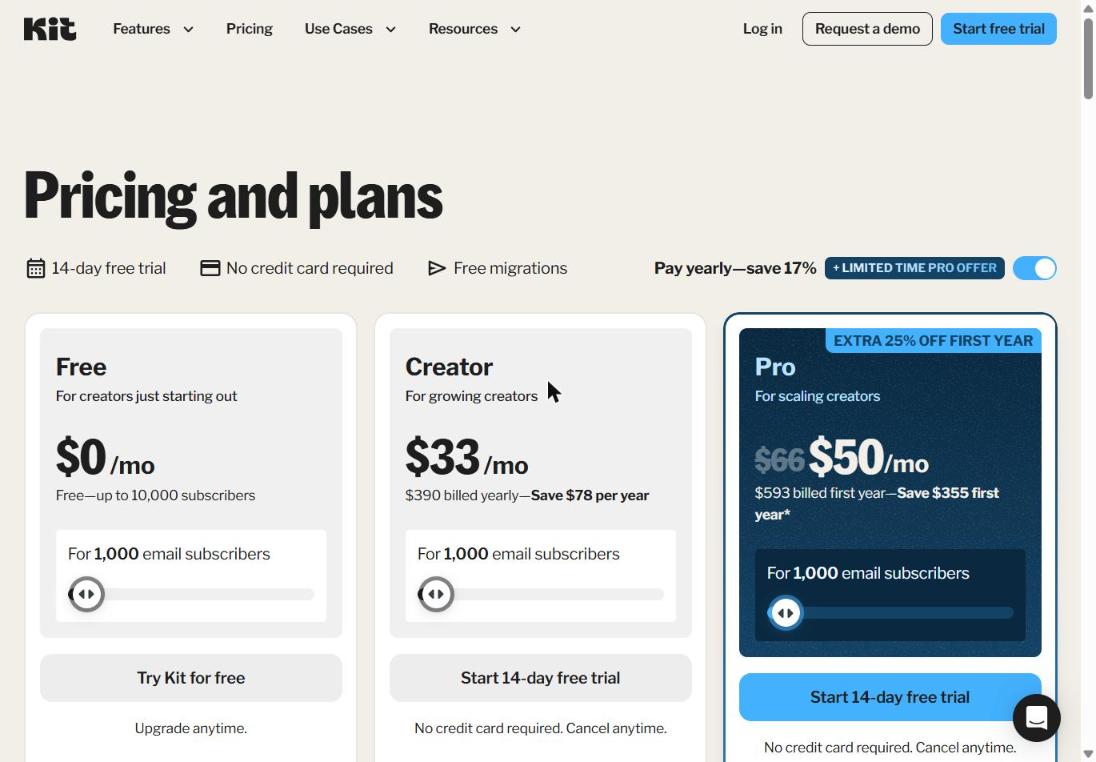
Kit’s free plan covers up to 10,000 subscribers, four times beehiiv’s free limit, with unlimited broadcasts, landing pages, and forms. The Creator plan costs $33 per month for 1,000 subscribers billed yearly ($390/year) and adds unlimited automations, branding removal, and 24/7 support. The Pro plan lists at $66 per month for 1,000 subscribers billed yearly, with a 25% first-year discount running in October 2026. Every paid plan has a 14-day free trial.
Pros and cons
Pros:
- Free plan for up to 10,000 subscribers
- Powerful Visual Automations for funnels and launches
- Sell digital products and subscriptions from the free plan
- Branding removal on the cheaper Creator plan
Cons:
- No built-in publication website or podcast hosting
- Fewer email design options than many competitors
- Pricing climbs quickly as your list grows
Best for
Creators, coaches, and course sellers who need automated funnels and want to sell digital products from the same tool.
Ghost
Ghost is an open-source publishing platform run by a non-profit foundation. You can self-host it for free or pay for the managed Ghost(Pro) service.
Features compared to beehiiv
Ghost is the closest match to beehiiv for publishers who see their newsletter as a full media site. It combines a fast, SEO-friendly website, email newsletters, memberships, and paid subscriptions in one place. Because it’s open source, you own your code, content, and subscriber data, and you can move your site anywhere.
Ghost has no recommendation network as large as beehiiv’s and no built-in ad marketplace. Its automation options are also basic compared with beehiiv’s paid plans.
Pricing
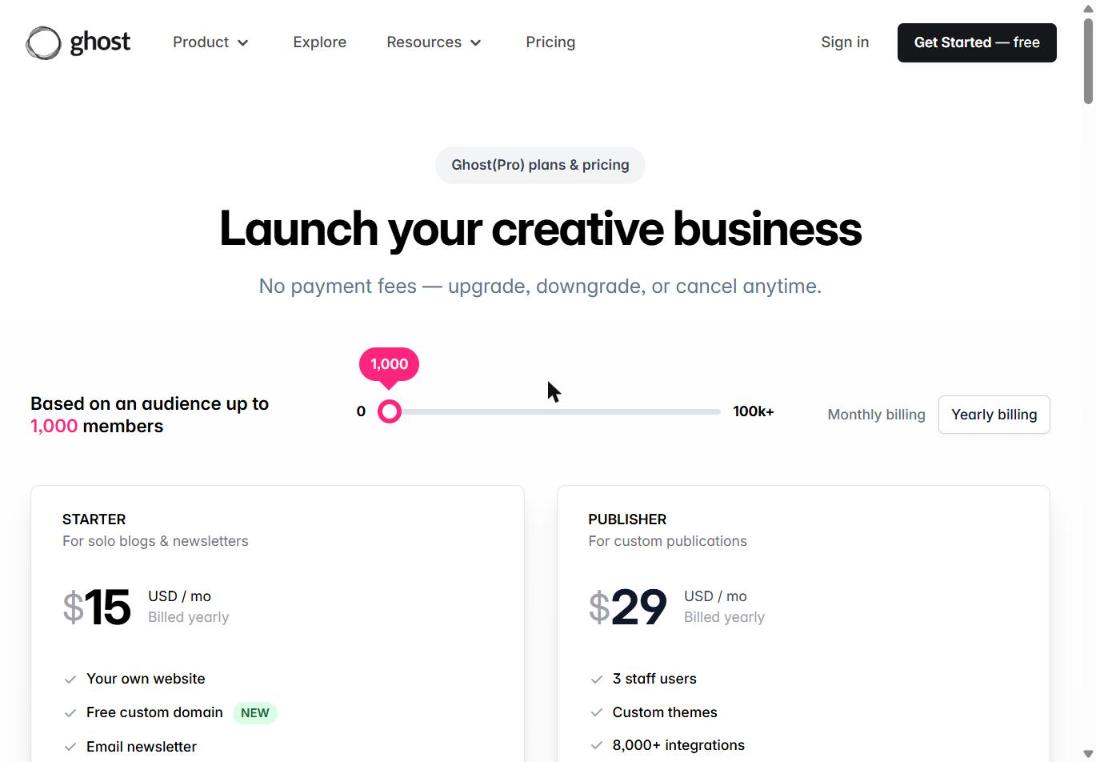
Ghost takes no payment fees on paid subscriptions, only standard Stripe fees. Ghost(Pro) plans for up to 1,000 members, billed yearly:
- Starter: $15/mo for a website, custom domain, and newsletter (no paid subscriptions)
- Publisher: $29/mo, adding paid subscriptions, 3 staff users, custom themes, and 8,000+ integrations
- Business: $199/mo with 15 staff users, priority support, and up to 10,000 members
Self-hosting is free, but you pay for your own server and email sending, and you handle the setup.
Pros and cons
Pros:
- 0% platform fee on paid subscriptions
- Open source, with full ownership of your content and data
- Strong website and SEO features
Cons:
- No free hosted plan
- Paid subscriptions require the $29/mo Publisher plan or higher
- Basic email automations and smaller discovery network
Best for
Independent publishers and media brands that want a professional website plus newsletter and full control over their platform.
MailerLite
MailerLite was founded in Lithuania in 2010 and is known for an easy-to-use editor and low prices.
Features compared to beehiiv
MailerLite is a general email marketing tool, not a newsletter publishing platform, but it covers most of what beehiiv users need day to day. You get a drag-and-drop editor, automations, landing pages, websites, signup forms, digital products, and paid newsletter subscriptions. HeyLite, its AI assistant, and an MCP connection for Claude and ChatGPT are included on paid plans.
MailerLite has no ad network or recommendation network, so growth depends on your own channels. Every paid plan gets the full feature set; you pay more only for a bigger list or more sending.
Pricing
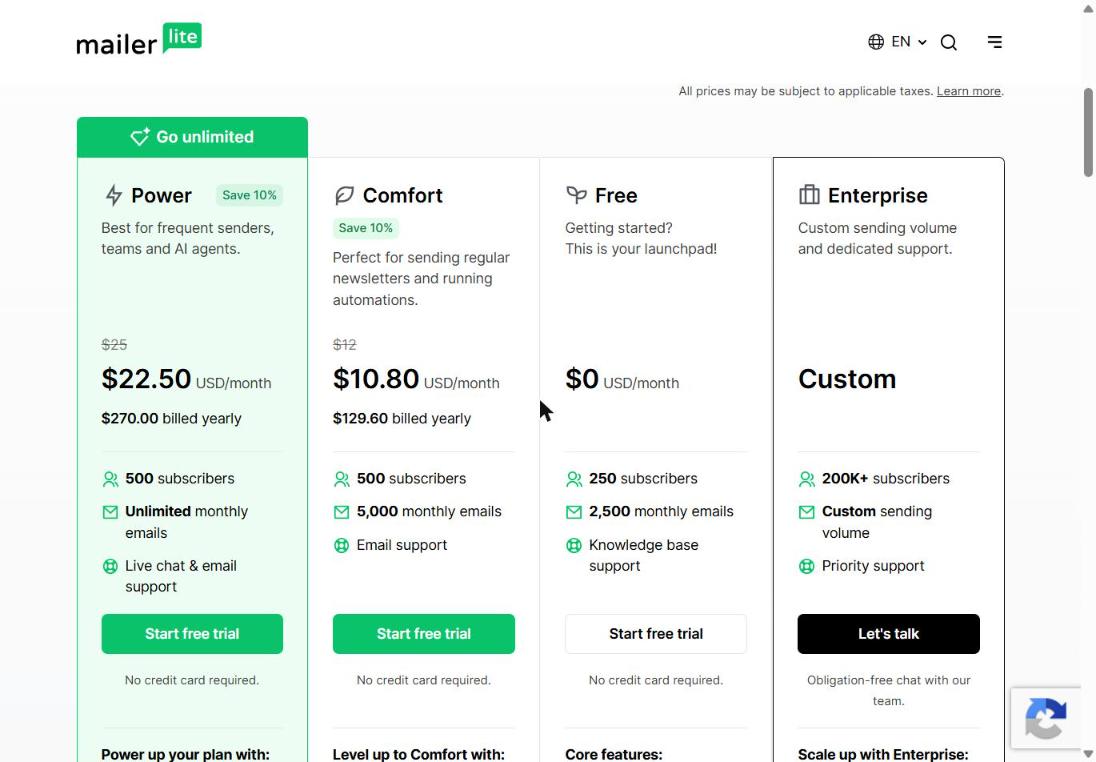
The free plan covers 250 subscribers and 2,500 emails per month, with automations, a landing page, and signup forms. Paid plans for 500 subscribers, billed yearly:
- Comfort: $10.80/mo ($12 monthly) with 5,000 emails per month, 50 automations, and 3 user seats
- Power: $22.50/mo ($25 monthly) with unlimited emails, automations, sites, and user seats, plus live chat support
Pros and cons
Pros:
- Low starting price with a full feature set on every paid plan
- Easy drag-and-drop editor and automation builder
- Websites, landing pages, and digital products included
Cons:
- Free plan is small (250 subscribers vs. beehiiv’s 2,500)
- No ad network or recommendation network
- Strict account approval process for new users
Best for
Small businesses and creators who want an affordable, easy email tool with automations and don’t need beehiiv’s monetization network.
Buttondown
Buttondown is a small, independent newsletter tool started in 2017, popular with developers, writers, and anyone who prefers simplicity.
Features compared to beehiiv
Buttondown is the opposite of beehiiv’s all-in-one approach. The core product is a clean editor (rich text or Markdown), sending from your own domain, and a hosted newsletter archive. It is privacy-first and has a well-documented API.
Everything else is an optional add-on: paid subscriptions, analytics, automations, tagging, sponsorships, and more. There is no recommendation network, ad network, or podcast hosting.
Pricing
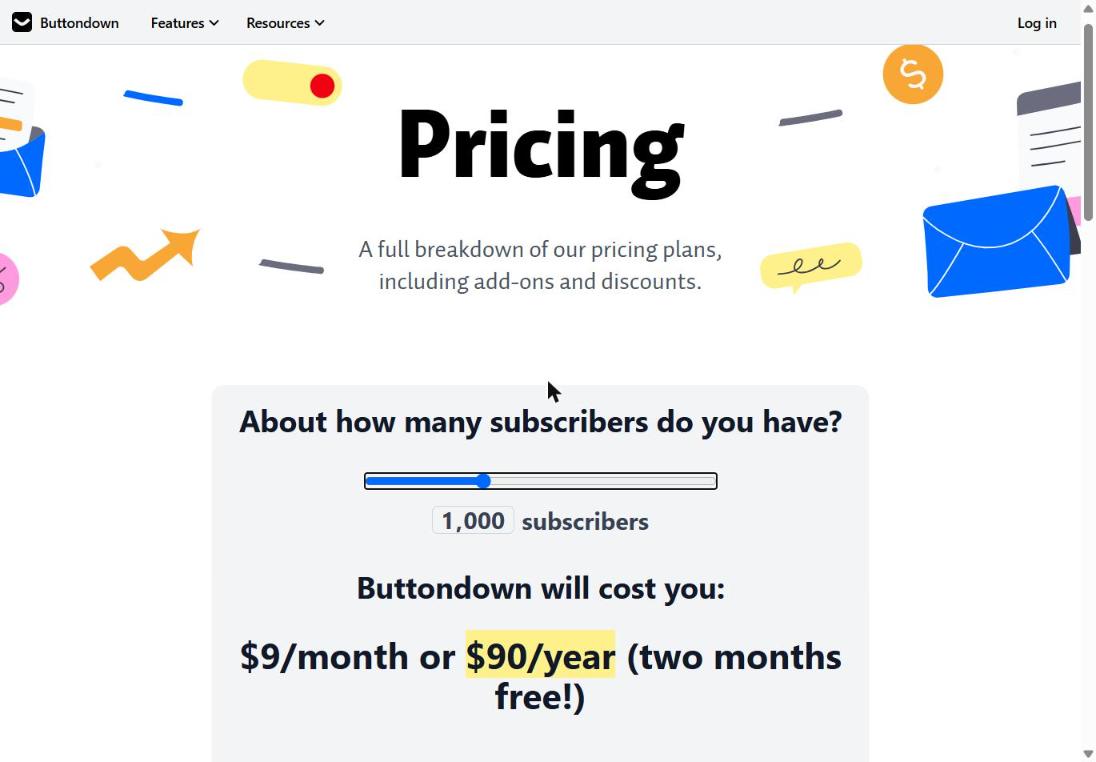
Buttondown is free for your first 100 subscribers. At 1,000 subscribers, it costs $9 per month or $90 per year. Add-ons cost extra: for example, paid subscriptions, analytics, and tagging are $9/month each, automations are $29/month, and whitelabeling is $79/month.
Pros and cons
Pros:
- Very low base price for small and mid-sized lists
- Clean Markdown editor and strong API
- Privacy-first approach
Cons:
- Free plan only covers 100 subscribers
- Add-ons quickly raise the total cost
- No discovery or monetization network
Best for
Writers, developers, and indie creators who want a simple, fast newsletter tool and only pay for the features they use.
How to Choose a beehiiv Alternative
The right alternative depends on why you’re leaving beehiiv:
- You want lower costs for a business newsletter: Sendigram (pay per email, unlimited contacts) or MailerLite.
- You want to earn from paid subscriptions without monthly fees: Substack (10% of revenue) or Ghost (0% fee, from $29/mo).
- You need a bigger free plan: Kit (up to 10,000 subscribers).
- You sell courses or digital products: Kit.
- You want full ownership of your site and data: Ghost.
- You want the simplest possible tool: Buttondown.
Before switching, export your subscriber list from beehiiv, check that your new platform supports your custom sending domain, and warm up sending gradually to protect deliverability.
Frequently Asked Questions
What is the best beehiiv alternative?
It depends on your goal. Sendigram is best for small businesses that want simple, affordable email marketing. Substack is best for writers starting a paid newsletter for free. Kit is best for creators selling digital products, and Ghost is best for publishers who want full ownership of their site.
What is the cheapest beehiiv alternative?
Substack is free to use and only takes 10% of paid subscription revenue. Among paid tools, Sendigram starts at $6 per month for 5,000 emails with unlimited contacts, and Buttondown costs $9 per month for 1,000 subscribers.
Is beehiiv free?
Yes. beehiiv’s free plan includes unlimited email sends for up to 2,500 subscribers, plus landing pages and the recommendation network. Paid subscriptions, ad monetization, and automations require the Lite plan, from $49 per month billed yearly.
Which beehiiv alternative has the best free plan?
Kit has the largest free plan, with up to 10,000 subscribers, unlimited broadcasts, and the ability to sell digital products. Substack is also free with no subscriber limit, but takes 10% of paid revenue.
Is Substack better than beehiiv?
Substack is better if you want to start for free and grow through its reader app and network. beehiiv is better if you want automations, A/B testing, more design control, and to keep 100% of your paid subscription revenue.
Can I move my subscribers from beehiiv to another platform?
Yes. You can export your subscriber list from beehiiv as a CSV file and import it into any of the alternatives above. Several, including Sendigram, offer free help with migration.
To Sum Up
beehiiv is a strong choice for media-style newsletters that want to grow through referrals and earn through ads. But if you need a bigger free plan, lower costs, stronger automations, or a tool built for business email, one of these alternatives may fit better.
If you run a small business and want effective email marketing without a dedicated team, try Sendigram with 10,000 free emails, no credit card required.


 Your Privacy Choices
