
- Home
- Friday Column
- How Should You Plan November H ...


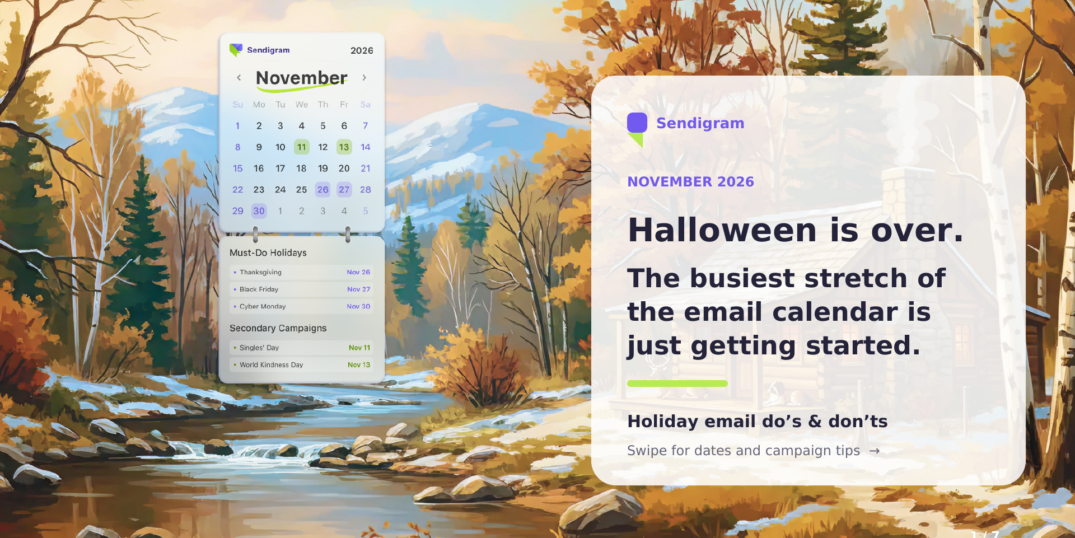
Halloween may be over, but the busiest stretch of the email marketing calendar is just beginning.
November brings several major campaign opportunities, including Singles’ Day on November 11, Thanksgiving on November 26, Black Friday on November 27, and Cyber Monday on November 30.
However, a crowded calendar does not mean your subscribers need more emails. The most effective November campaigns are relevant, easy to understand, thoroughly tested, and timed around the interests of your particular audience.
November 2026 email marketing dates at a glance
| Date | Occasion | Best campaign approach |
|---|---|---|
| November 11 | Singles’ Day | Relevant product recommendations or a subscriber-only offer |
| November 26 | Thanksgiving | A genuine thank-you message or restrained promotion |
| November 27 | Black Friday | A clear offer with accurate terms and a tested landing page |
| November 30 | Cyber Monday | A new deal, useful reminder, or honest final opportunity |
You do not need to build a campaign around every date. Choose the occasions that are genuinely relevant to your customers, products, and location.
What should email marketers do before the holiday rush?
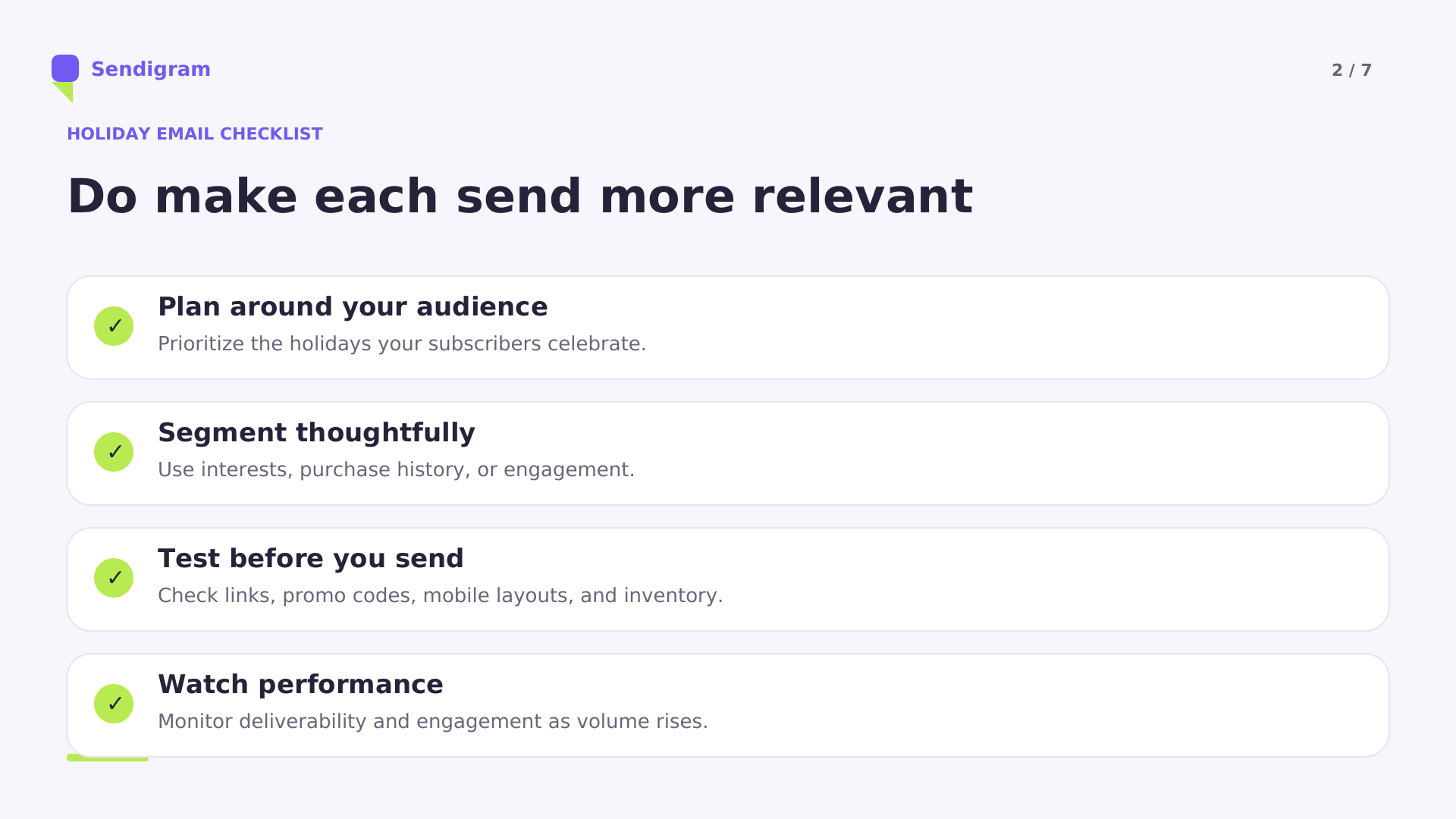
1. Plan around your audience
Do not begin with the holiday. Begin with the subscriber.
Consider which occasions your audience recognizes, what they are likely to need, and how each campaign fits the relationship they already have with your business.
Singles’ Day may be important to one audience and irrelevant to another. Thanksgiving may be appropriate for customers in the United States but confusing for an international list.
A holiday appearing on the calendar is not, by itself, a reason to send an email.
2. Segment thoughtfully
Segmentation can make holiday campaigns more relevant without making them unnecessarily complicated.
Useful segments might be based on:
- Previous purchases
- Product interests
- Location
- Recent clicks
- Customer status
- Engagement
- Average order value
- Website or account activity
Use recent, reliable information. A generic but accurate message is better than a personalized offer built on outdated assumptions.
3. Test before sending
Holiday campaigns often involve more moving parts than ordinary newsletters. There may be promotional codes, countdowns, special landing pages, product inventory, and multiple automated follow-ups.
Before launching, check:
- Every link
- Promotional codes
- Offer dates
- Product availability
- Mobile layout
- Images and alt text
- Subject line and preheader
- Audience exclusions
- Landing-page consistency
- Unsubscribe functionality
Complete these checks early enough to fix problems without rushing.
4. Watch campaign performance
Sending volume tends to increase during the holiday period, so monitor results throughout the campaign rather than waiting for a final report.
Watch for:
- Delivery delays
- Bounce increases
- Spam complaints
- Unusual differences between mailbox providers
- Declining clicks
- Landing-page errors
- Promotional-code failures
- Unsubscribes
If performance begins to decline, sending more emails is not necessarily the solution. You may need to adjust the audience, offer, frequency, or message.
What should marketers avoid during November?
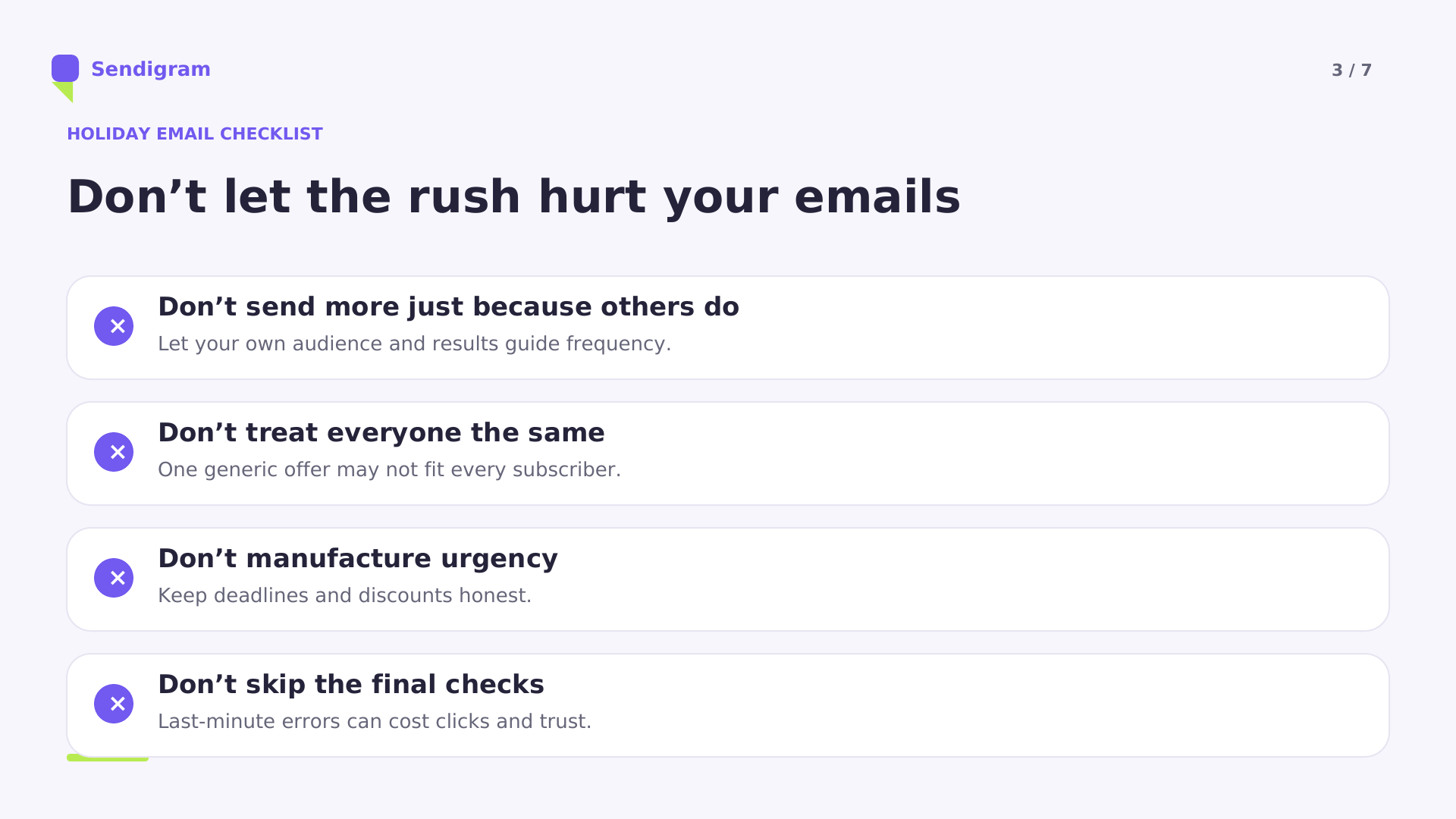
Don’t increase frequency simply because competitors do
Your subscribers do not experience your campaign in isolation. They may be receiving seasonal promotions from dozens of other brands.
Let your own engagement data and normal relationship with subscribers guide your frequency. An extra campaign should have a clear purpose—not exist merely because it is November.
Don’t send the same promotion to everyone
A universal discount may be easy to schedule, but it may not be relevant to every subscriber.
New subscribers, repeat customers, inactive contacts, and recent purchasers do not necessarily need the same message. Even simple segmentation can make an offer more useful.
Don’t manufacture urgency
Deadlines and scarcity should be genuine.
If an offer supposedly ends at midnight but returns the following morning, customers learn that future deadlines can be ignored. False urgency may produce a short-term click, but it weakens trust.
Clearly explain:
- What the offer includes
- Who qualifies
- When it begins
- When it ends
- Whether exclusions apply
Don’t skip the final review
A broken link or invalid promotional code is particularly costly during a short campaign window.
Test the entire journey from the inbox to the landing page and through checkout. The email, offer page, promotional code, and confirmation experience should all agree.
Email ideas for key November dates
What should you send for Singles’ Day?
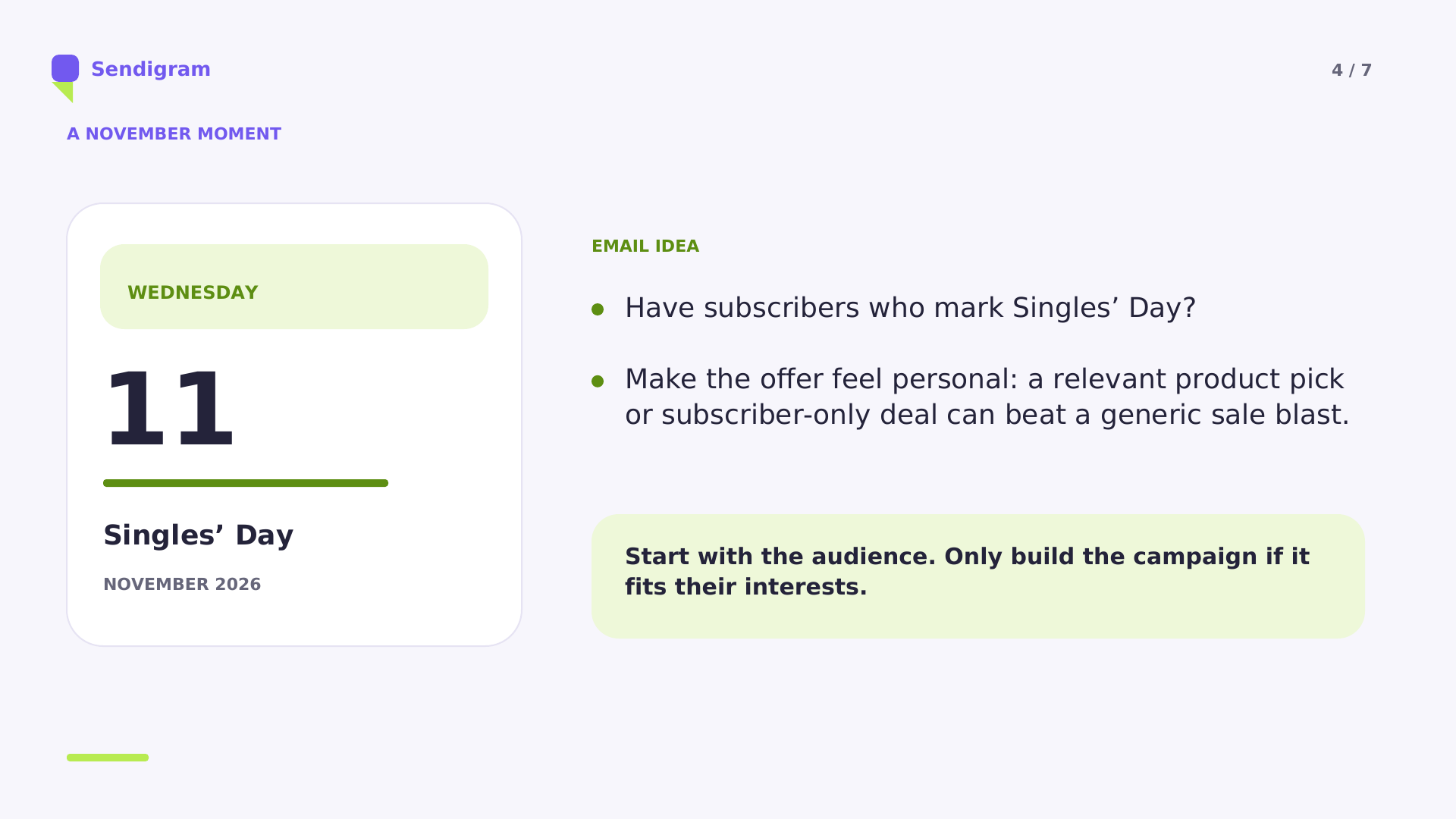
Singles’ Day falls on Wednesday, November 11, 2026.
Before creating a campaign, determine whether the occasion is meaningful to your audience.
If it is, consider:
- A subscriber-only offer
- A product recommendation based on genuine interests
- A self-care or “treat yourself” theme
- A curated collection rather than a site-wide promotion
A relevant recommendation may outperform a generic sale announcement.
What should you send for Thanksgiving?
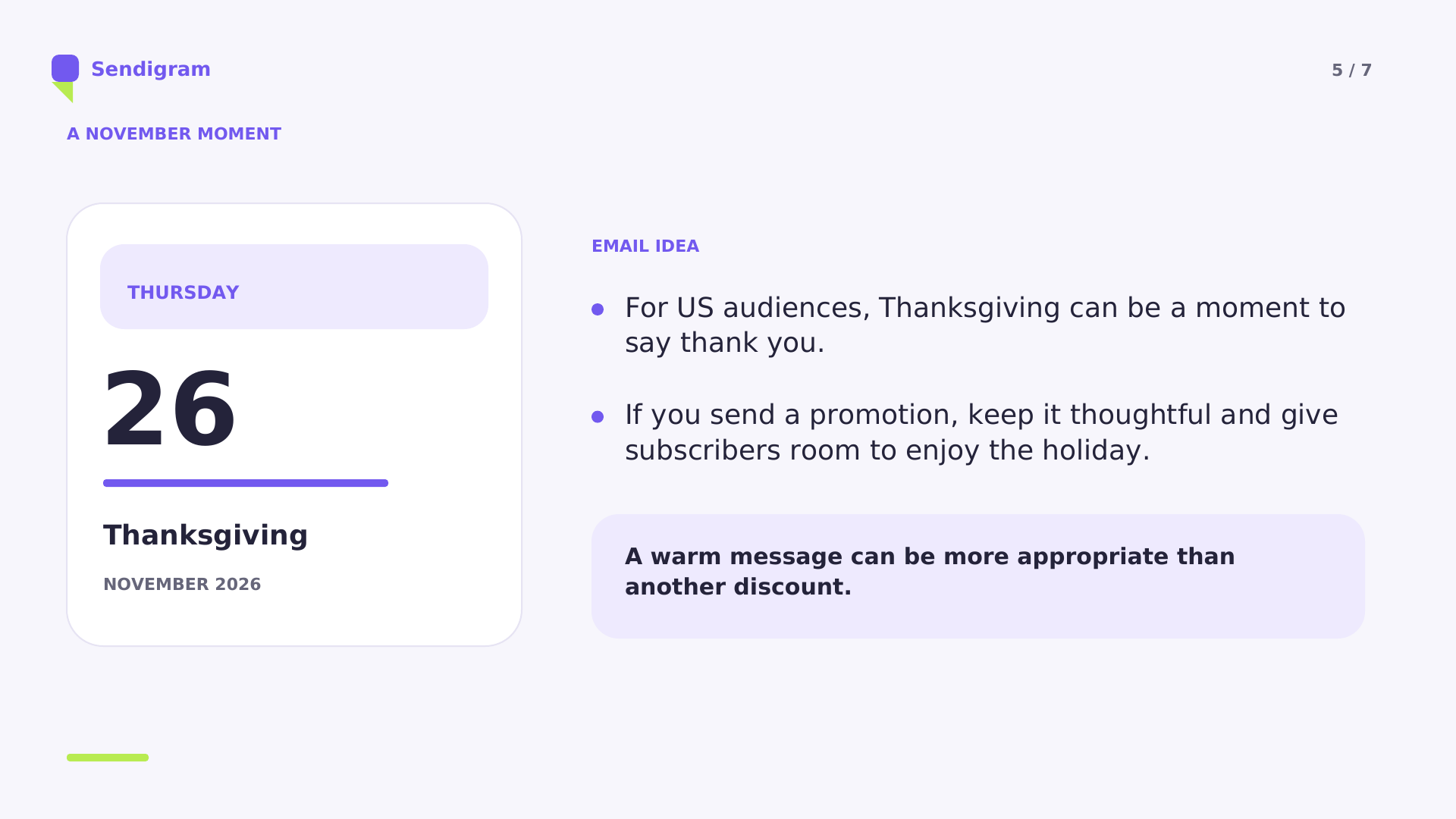
Thanksgiving falls on Thursday, November 26, 2026.
For US audiences, Thanksgiving can be an opportunity to thank customers, subscribers, employees, or community members.
Not every Thanksgiving email needs a discount. You could send:
- A short thank-you message
- A customer story
- A note from the founder
- A community update
- Helpful information about holiday opening hours
- A restrained preview of the following day’s offer
Give subscribers room to enjoy the holiday. A thoughtful message may be more appropriate than another promotion.
What makes a good Black Friday email?
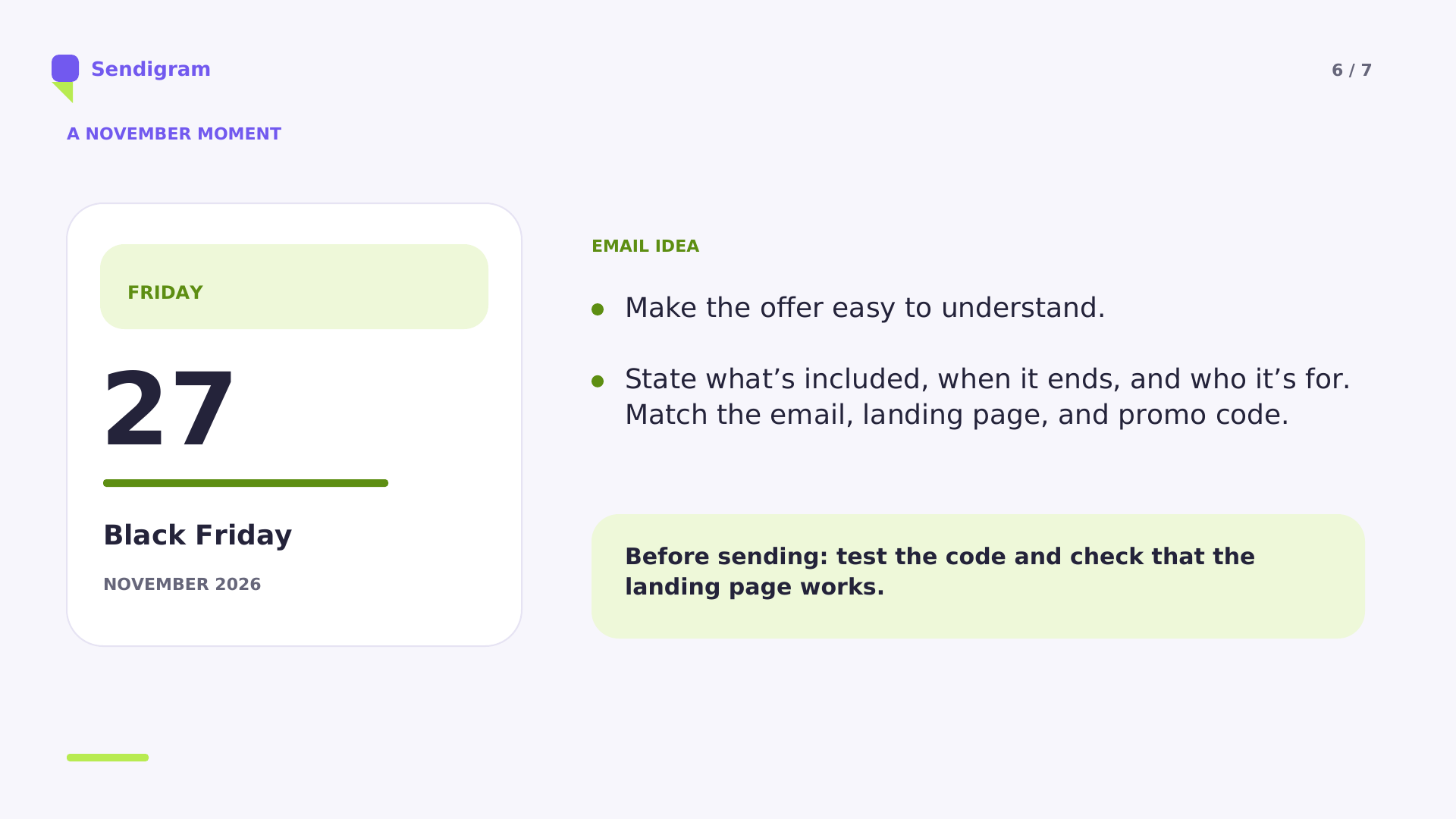
Black Friday falls on Friday, November 27, 2026.
A good Black Friday email makes the offer immediately understandable.
The subscriber should be able to answer:
- What is included?
- How much can I save?
- Who is eligible?
- When does the offer end?
- What should I do next?
Match the information in the email with the landing page and promotional code. Before sending, test the code and complete the customer journey yourself.
What should you send for Cyber Monday?
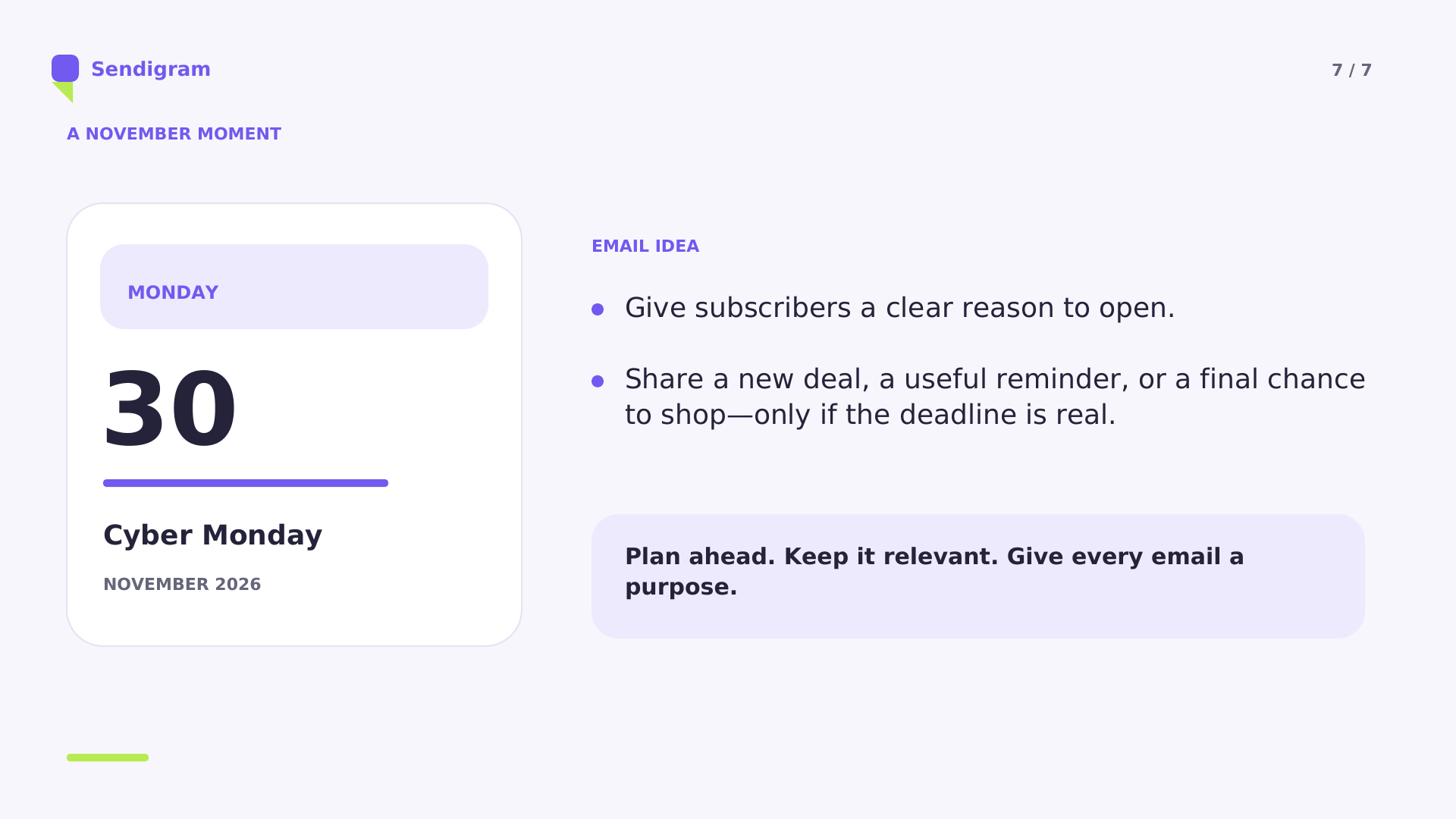
Cyber Monday falls on Monday, November 30, 2026.
Give subscribers a specific reason to open the email.
That reason might be:
- A genuinely new deal
- A different product category
- A useful reminder
- A bundle
- An online-only benefit
- A real final opportunity to purchase
Avoid repeating the same message with a different subject line. Every campaign should provide something new or useful.
A simple November campaign checklist
Before scheduling a holiday email, ask:
- Does this occasion matter to our audience?
- Does this message have a clear purpose?
- Are we sending to the right segment?
- Is the offer easy to understand?
- Are the deadline and scarcity claims genuine?
- Have we tested every link and code?
- Does the landing page match the email?
- Are we prepared to monitor deliverability and engagement?
November rewards preparation more than volume. Plan ahead, keep each message relevant, and give every email a reason to exist.
More November resources
- November newsletter ideas and free HTML templates
- Holiday email marketing calendar: best practices and ideas
- E-commerce holiday calendar by country
Frequently asked questions
Should businesses send emails for every November holiday?
No. Select the dates that are relevant to your audience, region, products, and brand. Sending for every occasion can increase fatigue without improving results.
When should Black Friday email campaigns begin?
Timing depends on your audience and offer. Some businesses introduce their campaign early, while others concentrate messages closer to Black Friday. Let previous engagement and customer behavior guide the schedule.
How many holiday emails should a business send?
There is no universal number. Every additional email should provide a new offer, useful reminder, important update, or other clear value.
How can businesses avoid holiday email fatigue?
Use segmentation, limit repetition, maintain honest deadlines, and monitor engagement. Do not increase frequency simply because other brands are sending more.
What should be tested before a holiday campaign?
Test links, promotional codes, mobile layouts, audience rules, landing pages, inventory, offer dates, and the complete purchase journey.


 Your Privacy Choices
