Understanding domain statuses: Verified, Processing, Unverified
Managing sending domains
Why DNS records matter for email deliverability
Adding & verifying DNS records (SPF, DKIM, DMARC)
Checking & resolving domain blacklist issues
Managing sender email addresses
Sender address requirements and best practices
What to do if a sender address is in use by active campaigns
Understanding shared vs. dedicated IP addresses
Connecting or disconnecting a domain to/from an IP address
Buying & managing dedicated IP addresses
User roles & statuses
User status explained: active and deleted users
How to add a new user: user invitations and registration
Managing user permissions and access rights
Default permissions for additional users
Deleting users
Transferring admin rights to another user
What happens after admin rights are transferred?
What happens when permissions are disabled for a user?
How to create your first email campaign
Campaign card overview: General, Contacts, Email template, Scheduler
Naming and renaming campaigns
Understanding campaign statuses: Waiting, In progress, Paused, Finished
Saving progress and navigating between campaign blocks
How to set up the sender email address and name
Managing reply-to addresses in campaigns
Selecting and managing IP addresses for sending
How to select recipients: Contacts, Groups, Segments
Excluding contacts and groups from a campaign
Understanding contact limits and subscription packages
What to do if you exceed your email sending limit
Validating contacts before sending: Email Checker explained
Choosing and editing email templates for campaigns
Uploading custom HTML
Writing effective subjects and preheaders
Adding and managing UTM parameters
Scheduling campaigns: send now or later
Setting up delivery dates, times, and days of the week
How to calculate and adjust sending volume over time
Managing dedicated IP expiration and renewal
How to preview and test your campaign
Managing and editing your test email group
Using the campaign calendar: viewing, filtering, and creating campaigns
Understanding campaign statuses: Active, Scheduled, Completed
Viewing campaign details and quick actions from the calendar
Navigating the campaign list: columns and filters
Searching and filtering campaigns by name, date, and status
Campaign card: overview, timeline, and audience
How to pause, continue, or delete a campaign
Understanding campaign statuses: Planned, Active, Paused, Finished
Campaign performance & analytics
Using heatmaps to analyze email engagement
Automations
Creating a New Automation
Understanding Automation Templates
Managing Your Automations List
Automation Builder: Overview and Navigation
Setting Up Automation Details (Name, Description, Tags)
Working with Triggers
Working with Actions
Managing Elements in the Workflow Canvas
Running and Pausing Automations
Automation Settings Panel
Managing Emails and Templates Inside Automations
Contact Management Inside Automations
Working with recent lists
Sendigram makes it easy to access your most recently used resources. Whether you’re managing contacts, creating campaigns, or editing templates, the system keeps your latest work at hand so you can quickly continue where you left off.
You could choose the number of displayed list items using the dropdown menu in the top right corner of the section. If you want to hide some lists you don’t use completely, click the settings button next to the number of displayed list items.
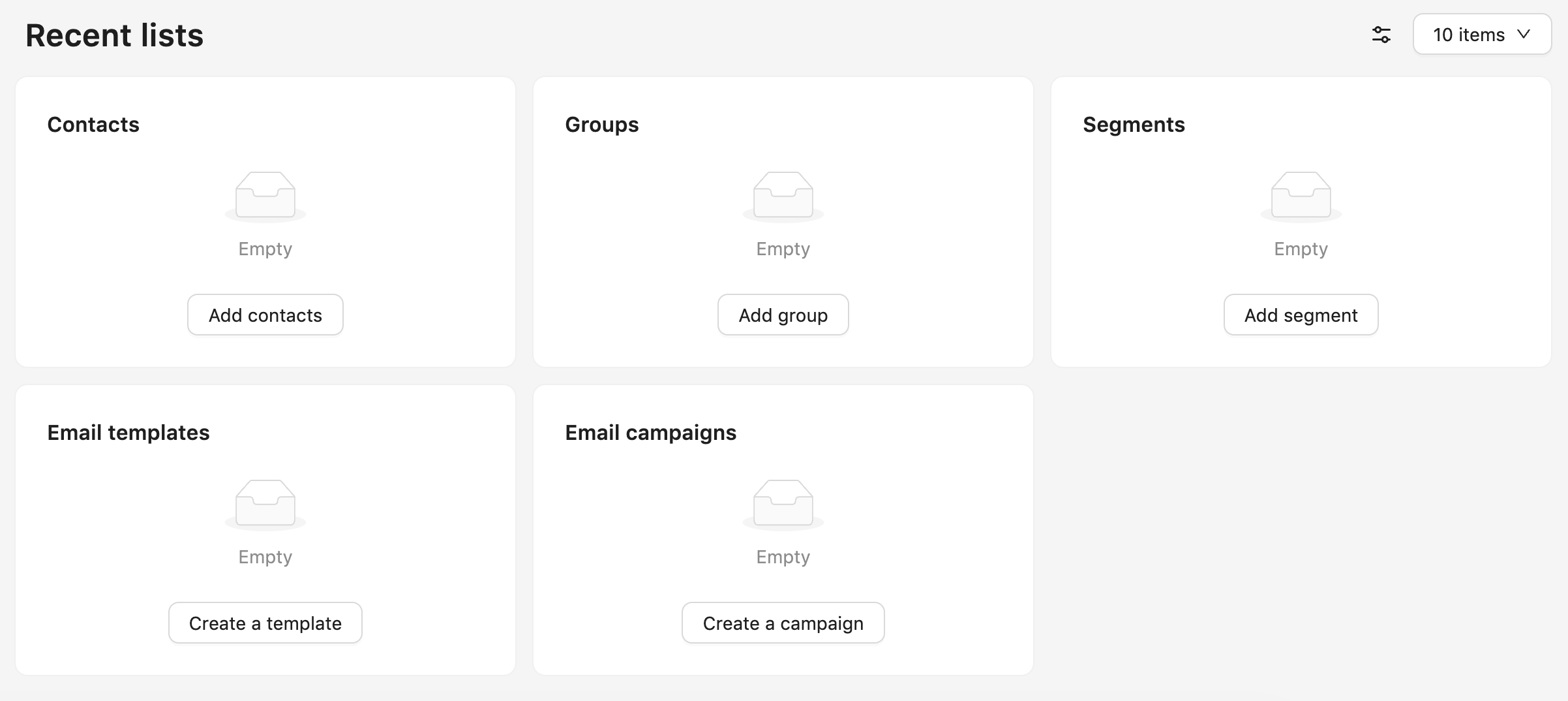
1. Contacts
- In the Contacts section, you’ll see the most recently added or updated subscribers.
- This helps you quickly check new sign-ups or imported contacts.
- Jump to your Contacts by clicking the View all button.
2. Groups
- In the Groups section, Sendigram displays the most recently created or modified groups.
- From here you can:
- See the list of the freshly created groups.
- Quickly open a group to explore the contacts it contains.
- Jump to the full list of groups by clicking the View all button.
3. Segments
- Segments allow you to target specific subsets of your contacts.
- The Recent Segments section shows the last segments you worked with — for example, “Inactive last 90 days” or “VIP customers.”
- You can quickly reuse or refine these segments for new campaigns.
4. Templates
- In the Templates area, the most recently edited or created email designs are displayed at the top. This allows you to pick up your design work without starting from scratch.
- You can quickly jump to the My templates section by clicking the View all button.
5. Campaigns
Still have questions?