Understanding domain statuses: Verified, Processing, Unverified
Managing sending domains
Why DNS records matter for email deliverability
Adding & verifying DNS records (SPF, DKIM, DMARC)
Checking & resolving domain blacklist issues
Managing sender email addresses
Sender address requirements and best practices
What to do if a sender address is in use by active campaigns
Understanding shared vs. dedicated IP addresses
Connecting or disconnecting a domain to/from an IP address
Buying & managing dedicated IP addresses
User roles & statuses
User status explained: active and deleted users
How to add a new user: user invitations and registration
Managing user permissions and access rights
Default permissions for additional users
Deleting users
Transferring admin rights to another user
What happens after admin rights are transferred?
What happens when permissions are disabled for a user?
How to create your first email campaign
Campaign card overview: General, Contacts, Email template, Scheduler
Naming and renaming campaigns
Understanding campaign statuses: Waiting, In progress, Paused, Finished
Saving progress and navigating between campaign blocks
How to set up the sender email address and name
Managing reply-to addresses in campaigns
Selecting and managing IP addresses for sending
How to select recipients: Contacts, Groups, Segments
Excluding contacts and groups from a campaign
Understanding contact limits and subscription packages
What to do if you exceed your email sending limit
Validating contacts before sending: Email Checker explained
Choosing and editing email templates for campaigns
Uploading custom HTML
Writing effective subjects and preheaders
Adding and managing UTM parameters
Scheduling campaigns: send now or later
Setting up delivery dates, times, and days of the week
How to calculate and adjust sending volume over time
Managing dedicated IP expiration and renewal
How to preview and test your campaign
Managing and editing your test email group
Using the campaign calendar: viewing, filtering, and creating campaigns
Understanding campaign statuses: Active, Scheduled, Completed
Viewing campaign details and quick actions from the calendar
Navigating the campaign list: columns and filters
Searching and filtering campaigns by name, date, and status
Campaign card: overview, timeline, and audience
How to pause, continue, or delete a campaign
Understanding campaign statuses: Planned, Active, Paused, Finished
Campaign performance & analytics
Using heatmaps to analyze email engagement
Automations
Creating a New Automation
Understanding Automation Templates
Managing Your Automations List
Automation Builder: Overview and Navigation
Setting Up Automation Details (Name, Description, Tags)
Working with Triggers
Working with Actions
Managing Elements in the Workflow Canvas
Running and Pausing Automations
Automation Settings Panel
Managing Emails and Templates Inside Automations
Contact Management Inside Automations
How to create a new template
Never build the same email twice. Any design you create in the Email Builder can be saved as a custom template. This is perfect for monthly newsletters, weekly promotions, or any recurring campaign, allowing you to maintain a consistent brand image effortlessly.
Step 1: Choose Your Starting Point
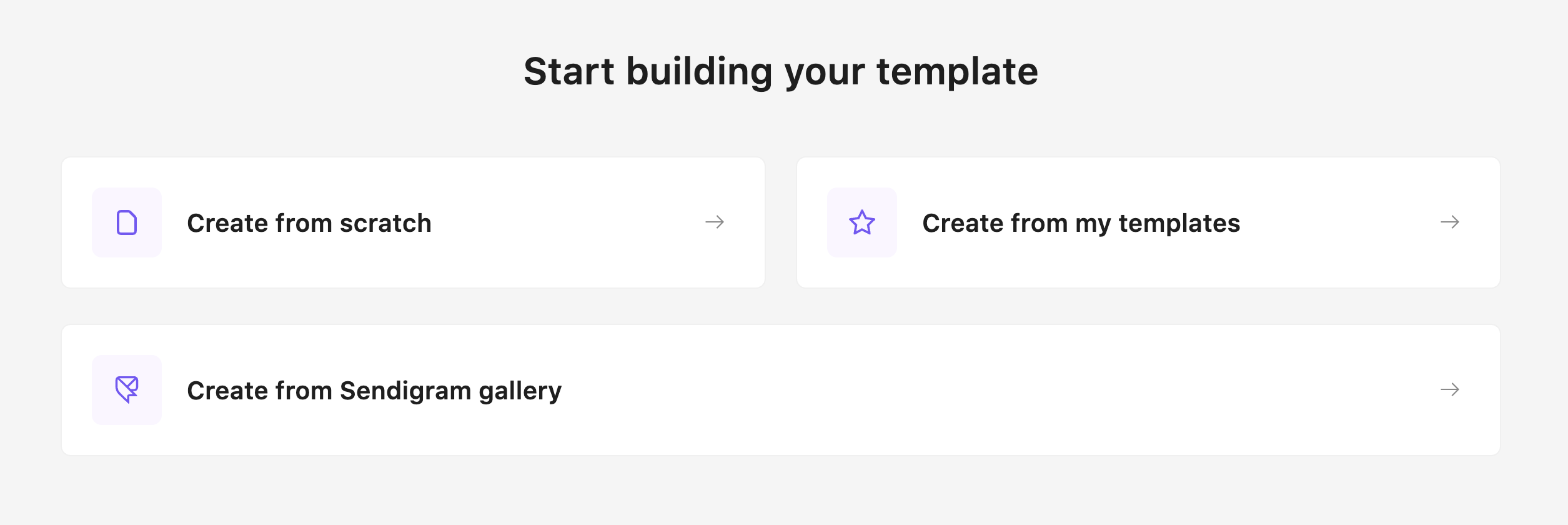
When creating a new email, you'll see three main options:
- Create from scratch: This option takes you directly into our powerful drag-and-drop editor. It's a blank canvas, giving you complete creative freedom to build a unique email from the ground up.
- Create from Sendigram gallery: Choose from a wide variety of professionally designed, ready-to-use templates. This is perfect for inspiration or for quickly launching a great-looking campaign.
- Create from my templates: UUse one of your own previously saved templates. This is the fastest way to maintain brand consistency and save time on recurring emails like newsletters. (Note: This option is only available if you have saved templates).
Option 1: Using the Sendigram Template Gallery 🎨
- Filter and Find: Use the filters to browse templates by category (e.g., "Newsletter," "E-commerce," "Holiday") to find the perfect fit for your message.
- Preview: Click the Preview button on any template to see a full-size version in a pop-up window. You can even toggle between desktop and mobile views to ensure it looks great on all devices.
- Select Your Template: Once you've found the one you love, click Use template. You'll be taken straight into the drag-and-drop editor with the template loaded, ready for you to add your content.
Option 2: Using Your Own Saved Templates
Choosing Create from my templates takes you to your personal library of saved designs.
- Search and Sort: Quickly find the exact template you need by using the search bar to look for a template's name or by filtering by its tags.
- Preview: Just like in the gallery, you can click on any template to open a preview window and check the desktop and mobile layouts.
- Copy and Edit: To use a template, click Copy and edit. Sendigram will create a new copy of your template and open it in the editor, ensuring your original master template remains untouched. This is the perfect way to start your next campaign without affecting past work.
Still have questions?